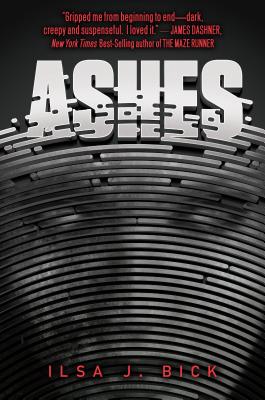
An electromagnetic pulse flashes across the sky, destroying every electronic device, wiping out every computerized system, and killing billions.
Alex hiked into the woods to say good-bye to her dead parents and her personal demons. Now desperate to find out what happened after the pulse crushes her to the ground, Alex meets up with Tom—a young soldier—and Ellie, a girl whose grandfather was killed by the EMP.
For this improvised family and the others who are spared, it’s now a question of who can be trusted and who is no longer human.
Author Ilsa J. Bick crafts a terrifying and thrilling novel about a world that could be ours at any moment, where those left standing must learn what it means not just to survive, but to live amidst the devastation.
Ilsa J. Bick is a child psychiatrist, as well as a film scholar, former Air Force major, and now a full-time author. Her critically acclaimed first YA novel, Draw the Dark, won the 2011 Westchester Fiction Award and was named a Bank Street College 2011 Best Book. Ilsa currently lives with her family and several furry creatures in rural Wisconsin, near a Hebrew cemetery. One thing she loves about the neighbors: they’re very quiet and only come around for sugar once in a blue moon. You can visit her online at www.ilsajbick.com.
By Dick Jordan Adventure travel writer Linda Ballou knows how to bring home a great story when she goes on a trip: Get into trouble. For her, the deeper the water, the fouler the weather, the more hazards underfoot and overhead, the better the story will be to tell.
Think about the alternative. You come back from your journey and tell your friends and family that you encountered no flights delays, no bad meals, no lost or stolen personal items, no bed bugs at your hotel, and not a drop of rain fell on your head. How do they respond to this tale of no-woe-at-all? By yawning.
There is no danger that you will nod off reading Ballou’s Lost Angel Walkabout: One Traveler’s Tales. Instead, you want to yell “No, Lindadon’t go there!’ or “Linda, whatever we’re you thinking?”, or “Watch out, Linda! Watch out!”
Linda’s travels have taken her on a wide path across much of the globe. One of the reason I enjoyed her book such much is that I have actually ventured—albeit as a less adventurous traveler—to several of the places she writes about in Alaska, Arizona, the British Virgin Islands, California, Colorado, Hawaii, Montana, and Wyoming.
In “Irish Mist” Ballou is—as often as the case in Lost Angel Walkabout—on horseback. She says “The Irish ride like they drive—with cheerful abandon!” Then she throws caution to the wind in the willows and goes on the equestrian equivalent of “Mr. Toad’s Wild Ride.”
While arm-chair travelers may deem Ballou possessed by a devil-may-care approach to danger on the road, to me her stories express a confident “What’s the big deal? I can do this!” attitude that probably comes from growing up in Southeast Alaska where self-sufficiency is an essential trait.
For example, when on a walk in a marshy area frequented by bears near Glacier Bay, Alaska, she found the tide beginning to rise rapidly and herself at risk of spending a cold night far from the comfort of her lodgings. She obviously lived to tell about her escape, so I’m not giving too much away be quoting from the penultimate paragraph of her story, “Bird Walk on the Wild Side,” while leaving you, the reader, to enjoy the final, humorous conclusion to it:
“My panic rose at the sight of matted areas of grass where large animals had bedded down the night before. I was over-heating from exertion and lectured myself out loud to stay focused, to mind each step, and to not hurry—twisting an ankle now would spell disaster. Keeping my center of gravity low, knees bent for balance on the boulders, I made a Groucho Marx exit through the marsh to the forest trailhead.”
Not all of Ballou’s travels involved risk of life and limb; some were emotionally challenging. In “Water Dogs,” she recounts a sailing trip in the British Virgin Islands with her mother. It was not their first trip together, and she writes:
“Traveling with Mom is like swimming in embryonic soup. It’s as though the cells that once divided and multiplied seek to rejoin themselves. A calm feeling, like being rocked in the lap of creation, fills me when I hold her hand. Our hearts beat in perfect rhythm. I feel grounded in the presence of my eternal witness, the only person who has been waiting for me at the end of all of my twisted adventures.”
But this time, it was stress, not calm, that both mother and daughter encountered. Her mother, who had wanted for years to make this trip, became frustrated when neither swim fins nor mask fit properly, thwarting her initial attempts at snorkeling. The story has a happy ending in the water that involves food—hot dogs— but you will have to buy the book to learn how this humble American wiener saved the day and the trip.
“Whether river rafting in the vast wilderness of her Alaska homeland or trekking through the emerald hills of New Zealand, Ballou's evocative writing takes you there. She reminds us that in a frenetic world connecting with nature's beauty can serve as our salvation.
Legendary travel writer, Tim Cahill, another member of the Book Passage conference faculty, calls Linda’s book
“a spirited collection of travel narratives recounting … haps, mishaps, and serendipitous adventures … Some of the stories might make you glad you stayed home, while others will inspire you to toss the TV clicker out the window and get up off the couch to explore our beautiful planet. All of these tales let you share the sensual experience of being there without straining one muscle, getting altitude sickness, or tipping your canoe."
“Lost Angel” in the book’s title comes from her place of residence—Los Angeles, the City of Angels, not from Ballou being constantly lost when away from home. And the “Walkabout” part? Well, if I lived in L.A., I’d be wanting to head for remote parts of the world as often as possible to get away from the press of humanity in that city, too.
(From time to time travel writer Dick Jordan posts book reviews under the “Armchair Travel” and “Book Review” sections of his blog, Tales Told From The Road. His last post to the Book(ed) Passage blog was about Living Abroad in Costa Rica, and the iPhone/iPad app, Costa Rica Trip Ideas, by travel writer Erin Van Rheenen. He is a member of the National Book Critics Circle. When Dick isn’t traveling, you can usually find him hanging out with other members of Left Coast Writers at the Book Passage store in Corte Madera on the evening of the first Monday of each month. He thanks Linda Ballou for providing him with a complimentary copy of Lost Angel Walkabout for review'; you can You can buy the book through the Book Passage Web site.).
Jeffrey Eugenides, the author of two beloved and truly great novels, Middlesex (winner of the 2003 Pulitzer Prize) and the now-classic The Virgin Suicides (made into a haunting film by Sofia Coppola), returns with one of the most anticipated novels of the year — a story about modern love.
And what's more, Jeffrey Eugenides will be reading from and discussing his new book at Book Passage on Saturday, October 15th at 4 pm. It's a rare West Coast appearance by the celebrated author, and an event not to be missed.
It's the early 1980s — the country is in a deep recession (sound familiar), and life after college is harder than ever. In the cafes on College Hill, the wised-up kids are inhaling Derrida and listening to the Talking Heads Foster the People. But Madeleine Hanna, dutiful English major, is writing her senior thesis on Jane Austen and George Eliot, purveyors of the marriage plot that lies at the heart of the greatest English novels.
Are the great love stories of the nineteenth century dead? Or can there
be a new story, written for today and alive to the realities of
feminism, sexual freedom, pre-nups, and divorce? With devastating wit and
an abiding understanding of and affection for his characters, Jeffrey
Eugenides revives the motivating energies of the novel, while creating a
story so contemporary and fresh that it reads like the intimate journal
of our own lives.
About the Author
Jeffrey Eugenides grew up in metro Detroit and attended Brown and Stanford Universities. His first novel, The Virgin Suicides,
was published by FSG to great acclaim in 1993. He has received
numerous awards for his work. In 2003, Eugenides received the Pulitzer
Prize for his novel Middlesex (FSG, 2002), which was also a
finalist for the National Book Critics Circle Award, the International
IMPAC Dublin Literary Award, and France’s Prix Médicis.
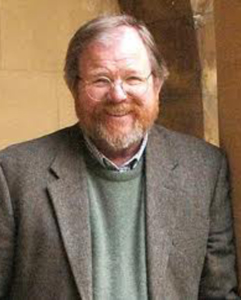
Bill Bryson is the prolific, hilarious mind behind such cherished classics as A Walk in the Woods and A Short History of Nearly Everything. On Monday, October 24th at 7;00pm, Bill Bryson will discuss At Home: A Short History of Private Life($15.95 paperback) at DominicanUniversity of California (Angelico Hall) in San Rafael, California. Please join us at this special Book Passage sponsored event. More info and tickets here.
In At Home, Bryson takes readers on a room-by-room tour through his own house, using each room as a jumping off point into the vast history of the domestic artifacts we take for granted. Book Passage contributing blogger Zack Ruskin spoke with Bryson about his newest book. Their conversation follows.
Bill Bryson: I was struck by how little I knew about the history of the objects that surround us in our daily lives and thought it might be interesting to look into all the things we take for granted -- the things most immediately around us.
Zack Ruskin: You’ve made a wonderful habit out of tracing the roots of things we pretty much take for granted. When did you first discover how engrossing the histories of refrigerators and chimneys could be?
Bill Bryson: I have always taken the view that almost everything is fascinating if you just take the trouble to look at it with an open mind.
Zack Ruskin: Of all the minutiae you put to the microscope in At Home, is there any one tidbit that you find most astonishing?
Bill Bryson: What surprised me most was how long it took us, as beings, to get comfortable. You would think that comfort is something we would naturally strive for, but actually for most of history most people -- even well off people -- lived in conditions that were cold and damp and woefully ill-lit. As I say in the book, the history of private life is really a history of getting comfortable slowly.
Zack Ruskin: Many readers know you primarily through your travel narratives. Do you see At Home as a travel narrative of sorts, in addition to its qualities as a history text?
Bill Bryson: I suppose so, but in that sense all books are a journey of some sort, aren't they? The main difference between this one and my travel books is that not once in At Home do I get drunk and make a fool of myself.
Zack Ruskin: If you were living, say, a thousand years ago, what aspect of your home do you think you’d miss the most? For me, I’m pretty partial to indoor plumbing.
At Home: A Short History of Private Life
Bill Bryson: For me it would be lighting. Something that everyone should do sometime is sit with a single candle in an otherwise completely dark and see how you would like to spend all your evenings like that. It would drive you crazy. Yet for much of history a single candle was all the light that most most households would have burning at any one time.
Zack Ruskin: I want to thank you for your Bryson's Dictionary for Writers and Editors. I keep in on my writing desk and consult it more often than I care to admit. What was your initial intention with that book? Were you seeing writers and editors make egregious mistakes, and wanting to straighten them out?
Bill Bryson: Thank you for those kind words. English is a tough language and, like most people, I am often uncertain about matters of usage and spelling. Is the word for a rough patch of skin callus or callous? What is the difference between imply and infer? Do I write gantlet or gauntlet, and does it matter? My idea was to provide a quick, concise guide to all the things (or at least all the ones I could think of) that commonly cause problems in English.
Zack Ruskin: Many writers struggle to make the all-important first dent on the blank page or screen. As an immensely prolific writer, I’d love to know your approach for beginning a new book or article.
Bill Bryson: It is the hardest thing in the world, and I can tell you it doesn't get any easier. I don't have any special trick, I'm afraid. It's just a question of sitting down at a keyboard and making your fingers move.
Zack Ruskin: I’m not sure why, but I have often thought about how amazing it would be to read a book by you set in Antarctica. Have you been there? Would you ever consider it?
Bill Bryson: I would love to go to Antarctica. Unfortunately, I recently gave my wife a solemn vow that I would stop wandering off all the time and instead spend my twilight years following her around the garden with a wheelbarrow. So Antarctica is not a realistic proposition for me at least in the short term.
Zack Ruskin: The element of humor is an integral part of your works. Do you ever feel obligated to be funny? How do you integrate humor into your prose?
Bill Bryson: For me, humor is always really hard work, and using humor when you are making a serious point is the hardest of all, but I do think it can make a world of difference to the accessibility of text at times.
Zack Ruskin: Before I let you go, I’d love it if you’d share with us a couple of your favorite word origins. Etymology is such an awesome subject area, especially in the archaic land of the English language.
Bill Bryson: I love the way the meanings of words change and slosh about over time. The example that spring to mind for me is toilet. Originally it was a piece of linen fabric, then it became a ladies' dressing table, then the act of dressing, then the dressing room itself, then any small private room. The result is that today toilet has lots of meanings that range from lavatorial to fragrant -- which is why there is a world of difference between "toilet" and "toiletries."
Adam Mansbach's spoof children's book, Go the F*ck to Sleep, has been flying off bookshelves and delighting exhausted parents since it was published this spring.Profane, affectionate, and radically honest, California Book Award-winning author Mansbach’s verses perfectly capture the familiar—and unspoken—tribulations of putting your little angel down for the night.On Monday, October 17th at 7:00 pm, Adam will read and discuss his new book at Book Passage in Corte Madera, CA. Please join us, but leave the kids at home!
Recently, Book Passage contributing blogger Zack Ruskin spoke with Adam about his new book. Their conversation follows.
Zack Ruskin: What was the process that took place between you having the idea for your book and it being parlayed into an actual published title?
Adam Mansbach: I thought of the book one night after putting my daughter to bed, and I jokingly posted on my Facebook: “be on the lookout for my upcoming children’s book, Go the F*ck to Sleep”. I was just kidding around, but in writing that, I realized, yeah, I know how to write that book, that might be a funny book to write. So it started percolating in my mind, and then a week or so later, I actually sat down and wrote it. From then on, it was conceptualized as something that would be a book, never on the web. I think some people have written or been mistaken in thinking that the book was first posted on Facebook, verse by verse. I had the initial idea while fucking around on Facebook, but then I sat down and wrote the book. Then, much later in the process - the book originally was supposed to be published in October, a couple weeks from now -in late April, I did a reading of the book, in Philadelphia at an art salon, and it went over really well. People started buying the book, pre-ordering the book online, and that sent the book skyrocketing to number one on Amazon. A week after that, a PDF of the book leaked. We had sent an early PDF of the book to booksellers, basically to try to get some support from them, blurbs and so forth. That PDF got leaked and started ricocheting around the internet, so at that point there was this pirated copy. We didn’t do that. We were actually sort of terrified. We thought it meant no one was going to buy the book. Luckily though, it’s bad form to show up at a baby shower with like a low-resolution, printed-out PDF that you pasted together.
Zack Ruskin: Once you’d written the text for the book, did you find that publishers were pretty skeptical of it as an idea, or did they think it was pretty sure-fire once you pitched it to them?
Adam Mansbach: I didn’t send it out to publishers. I really only sent it to Akashic. It wasn’t something I submitted broadly. I only took it there, both because I thought it might appeal to them, and also because I like the work they do, and Johnny Temple is a good friend of mine. I’ve done some things with them in the past. I remember the selection of people who saw the book. Johnny was the only person in the publishing world who got a look at it and he jumped on it. He thought he might be crazy to jump on it; it was somewhat uncharted territory for all of us. He did some research, showed it around to people: a distributor, bookstores. We got really good feedback, so we decided we should go ahead and take a shot at it.
Zack Ruskin: Were you guys pretty committed from the outset that you were going to keep all the profanity and not change any of that to try to cater to a larger audience?
Adam Mansbach: Yeah. That was the book, and that was the fun of the it. We were always very clear on that. There was never any question of cutting the cursing out or anything like that.
Zack Ruskin: I read recently that you’re doing a new version of it that doesn’t have cursing in it, a version that could actually be read to kids.
Adam Mansbach: We’re doing a kind of companion volume that’s actually intended for kids in the spring. It’s called, Seriously, Just Go To Sleep. It’s in no way meant to replace the original -- it’s a different book. It has different illustrations, and different verses. It’s very much related to the original, but it’s not a replacement.
Zack Ruskin: Was Seriously, Just Go to Sleep based on feedback from people saying to you or Akashic, “God, I wish I could to read this book to my kid, but I’d be a bad parent if I did”?
Adam Mansbach: That’s exactly right. It was also a lot of people saying, I do read this to my kid, but I have to censor it as I go. We figured, let’s give them something where they don’t have to do that, and they can read the words as they actually stand, the way they’re intended to, and kids can enjoy it.
Zack Ruskin: As far as the illustrations go, was there a type of kid’s book, or a specific book that you drew inspiration from?
Adam Mansbach: No, it was really more that I knew Ricardo would be a great illustrator for it, and I just reached out to him. He’s an old friend of mine, and I liked his work and admired his work for years. We’d actually worked together in the past, way back in the day, when we were back in college on a hip-hop magazine that I started called Elementary. Ricardo was the art director for it. I had a conception of what the illustrations should be like, that they should essentially play the straight man. The verses were going to be where the humor lay, and so it became clear that Ricardo’s job was to play counter-point to the words. We wanted each illustration and verse to have a unique relationship to one another, so that it wasn’t too predictable, so that we would keep readers guessing a little bit about how it might play out. Ricardo’s style is so beautiful; in a way I think the book gave him liberties to be as cloyingly sweet as he wanted to in places, because the verses were going to counter-punch that. The illustrations were sometimes straightforward, sometimes a bit subversive. They have little touches, and in the children’s version, there’s even more of that, because now we get to play off the original book. Readers of the original book might get a little kick out of seeing how we flipped it up.
Zack Ruskin: You’ve found out Go the F*ck to Sleep is going to published. Do you have any sort of inkling that people are going to crazy for it, that it’s going to become a de-facto baby shower gift?
Adam Mansbach: I didn’t have many expectations. I was just tickled that the book was going to be published at all, because it was wacky. It didn’t fit into any genre. It was this crazy thing that I’d written for my own amusement, so really I was excited that it was being published at all. It’s funny - it was exactly a year ago that I sent Johnny my initial email. The other day he dug it up, the original email I sent him to pitch the book, and in that email, I’d completely forgotten about this, I said something to him like, “I think every parent in the world can relate to this”. Partly that was me pitching a publisher, but I think I did believe that too. I didn’t have any expectations, but I guess I thought that at most, it would become this kind of cult classic/niche thing. I never dreamed it would have the mainstream encouragement it’s had, or that we’d sell the number of copies we’ve sold. That definitely never entered into my mind. I’d have to be some kind of asshole to have anticipated this level of success.
Zack Ruskin: That’s true. There’s only one way to answer the question. You can’t be like, “of course I thought it would be huge!".
Adam Mansbach: (laughs) Oh yeah, I knew this was coming. I bought a Bentley in anticipation of this happening.
Zack Ruskin: Now that you have this under your belt, and soon the kid’s adaptation too, are you pretty well set in the genre? Is Akashic maybe hoping that you’re going to think of something else that would sit comfortably on a shelf next to Go the F*ck to Sleep?
Adam Mansbach: I wouldn’t rule out doing something in a similar vein at some point, but I’m certainly not in a rush. I don’t want to be the guy who takes a good idea and beats it into the ground, and does successively less funny books until everybody is like, “oh, give me a fucking break, you’re such a cheeseball”. I was writing novels before this, and I’ll continue to write novels after this. I have a bunch of other projects coming out, and they are not obscene, fake children’s’ books. I have a new novel coming out, a graphic novel on the way, a couple thrillers I just did a deal for and I just sold a TV show. So I have a bunch of other shit on my plate.
Zack Ruskin: Is your graphic novel an original work?
Adam Mansbach: Yes it is. It’s called Nature of the Beast. I’m really psyched about it. It’s kind of an action-adventure-sci-fi thing, and it’s pretty crazy.
Zack Ruskin: Is it a self-contained thing or is it the first volume of something larger?
Adam Mansbach: It’s a self-contained story. It’s like 235 pages, so it’s a pretty substantial piece. It’s full-color and beautifully illustrated by Owen Brozman. I wrote it with a buddy of mine named Douglas McGowan. Doing that much art takes a long time, so this has been in process for years at this point, and I think we’re ready to let it out into the world.
Zack Ruskin: I want to make sure I ask you about the audio version of Go the F*ck to Sleep, which is amazing. I’m curious if before Sam Jackson came on-board, if you had a little hit-list of names, like “if it could be any of these five people, I’d just die”?
Adam Mansbach: They asked us for suggestions, so we put a list together, and we totally had our dream list of people. Sam was one of them. So was Christopher Walken. Werner Herzog, who ended-up recording a version for us, was on there. Then I had some more whimsical choices of my own. I would like to hear Slick Rick do the audio version, for instance. That would mean a lot to me personally…probably not to anyone else.
Zack Ruskin: I’ll keep my fingers crossed for that to happen.
Adam Mansbach: Thanks!
Zack Ruskin: What was it like when you first heard Samuel Jackson read your book?
Adam Mansbach: Actually, the first time I heard him do it was the day the book was published. We had our launch party at the New York Public Library and a friend of mine played it for me and took photos of my reaction to hearing it for the first time.
Zack Ruskin: I’d love to see those photos.
Adam Mansbach: My face made expressions I didn’t even know were possible.
We are happy to announce the addition of Carl Lennertz, Executive Director, World Book Night U.S., book marketing specialist, independent bookselling advocate, and author of Cursed by a Happy Childhood, to the faculty of the 2012 Book Passage Mystery Writers Conference, July 19-22 at Book Passage in Corte Madera, California. Former Vice President of Retailing at HarperCollins Publishers, Carl brings more than 20 years of experience in both bookselling and publishing. His biography on the blog Publisher Insider, which he founded, states:
I am fascinated by how and why books sell. What are the intrinsic qualities as well as the hype that makes a book catch on? Word of mouth especially intrigues me, and not just for books. Movies? Music? Theater? Art? All of it; what is it about each creative work that makes us pay attention. I think of myself as a student of the business of books vis a vis the business of movies, music and art. But even bigger than that, I think it is safe to say that we book readers are also music, movie and art lovers, and that we, especially, revel in seeing and hearing all that in public spaces as well as in solitude. We need and crave both, yes? I hope to write about such bigger picture issues here, in long pieces as well as short blips.
My background: Worked in bookstores in the 70s, worked at Random House thru the mid-90s and then helped launch the Book Sense program for independent bookstores. I am now with HarperCollins, working on various aspects of marketing with some very talented people on every kind of book imaginable. I will mention books from all sorts of publishing houses and also plug some movies and music, as well as some of my favorite small art museums. My main desires here are to learn more about this thing called word of mouth, about books in the larger society, and, most specifically, to promote the experience of getting out to hear authors and musicians and actors do their thing live.


 Adventure travel writer