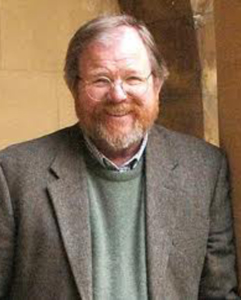
Don Winslow is the New York Times bestselling author of more than a dozen books, including the newly released The Kings of Cool: A Prequel to Savages. Winslow's new novel was published to coincide with the release of the film adaption of Savages, directed by Academy Award-winning filmmaker Oliver Stone. Ahead of his presentation as the keynote speaker at the 2012 Book Passage Mystery Writers Conference, Don Winslow took a moment to speak with Book Passages Zack Ruskin.
Don Winslow, author of The Kings of Cool: A Prequel to Savages and keynote speaker at the 2012 Book Passage Mystery Writers Conference.
Zack Ruskin: Did you always envision Savages as a multi-book saga?
Don Winslow: No. The idea came much later.
Zack Ruskin: What inspired your choice to go back in time rather than forward with your characters in The Kings of Cool?
Don Winslow: I wanted to write an origin story. To peel back the
layers on those three characters ‘before they were savages’. I also
wanted to write a story about generations, something that spoke to the
beginnings of the drug trade in southern California, and maybe even
about America itself over the course of those years.
Zack Ruskin: You co-wrote the screenplay for Savages with
Shane Salerno and Oliver Stone. Was it difficult to give your work over
to other writers? Did you bring any expectations into the screenwriting
process?
Don Winslow: Well, Shane was ‘present at creation’, as it were, when I was first writing the novel of Savages,
so he knew the book from day one. That made it easier, as I felt that
he really understood the book. As for my expectations, I knew that
screenwriting was going to be challenging – and it was.
Zack Ruskin: The book’s three protagonists are Ben, Chon and O.
Which of the three is the most removed from you? Did you enjoy writing
all three of them equally?
Don Winslow: I think there are parts of me in all three
characters, and parts in all three from which I feel very removed. But
not one more than another. I did enjoy writing all three equally,
although O is probably the funniest.
Zack Ruskin: Before your novel and shows like Weeds, I
never thought of marijuana in terms of cartels and intricate, highly
lucrative productions. What first drew you to write a book on the
subject?
Don Winslow: Several years ago, I wrote a book called The Power of the Dog,
about the evolution of the drug cartels in Mexico, so I’ve long been
drawn to the subject. The situation has gotten horrifically worse since
I wrote Dog and I thought it needed an updating in Savages.
Zack Ruskin: Should anyone expect any future books in the Savages line, or has that story now run its course with The Kings of Cool?
Don Winslow: I don’t have any immediate plans to another one – but never say never.
Zack Ruskin: Has the experience of working on the film for Savages given rise to any further screenwriting ventures?
Don Winslow: In fact, Shane and I just finished a screenplay of my book Satori which has Leonardo DiCaprio attached that Warner Brothers is planning for 2013. Shane was responsible for bringing Satori and Savages
coming together as films. He has a company called The Story Factory
that is the bridge between authors and Hollywood. Shane has set up
several of my other books as film properties and produces all of my
work. He has done a terrific job for me, protected my rights and made
certain I had a real seat at the creative table.
Zack Ruskin: I quite enjoy the opening chapter of Savages.
Was that a choice made to rapidly establish character, or is something
more expansive? Did your editors have any problems with it?
Don Winslow: It was a choice to establish an attitude, which then
had to be carried out through the book. Once you jump on the deep end,
you have to swim. Surprisingly, the editors didn’t have a problem with
it. Who’d have thought, huh?
Zack Ruskin: You’re giving the keynote address at the Book Passage Mystery Writers Conference later
this month. What importance do you place on interacting with fellow
writers in the genre and fostering a community for ideas and support?
Don Winslow: Crime writers are a pretty close-knit group, and I
don’t get to hang out with my colleagues as much as I’d like to. So
this is always a fun event. I look forward to seeing people, kicking
things around, and having some laughs with some of the most entertaining
people I know. It’s very important.
------
More on Don Winslow can be found on his website at http://don-winslow.com Zack Ruskin has interviewed a number of authors that have visited Book Passage, including Ann Patchett, Khaled Hosseini, Erik Larson and Gregory Maguire.
Bill Bryson is the prolific, hilarious mind behind such cherished classics as A Walk in the Woods and A Short History of Nearly Everything. On Monday, October 24th at 7;00pm, Bill Bryson will discuss At Home: A Short History of Private Life($15.95 paperback) at DominicanUniversity of California (Angelico Hall) in San Rafael, California. Please join us at this special Book Passage sponsored event. More info and tickets here.
In At Home, Bryson takes readers on a room-by-room tour through his own house, using each room as a jumping off point into the vast history of the domestic artifacts we take for granted. Book Passage contributing blogger Zack Ruskin spoke with Bryson about his newest book. Their conversation follows.
Bill Bryson: I was struck by how little I knew about the history of the objects that surround us in our daily lives and thought it might be interesting to look into all the things we take for granted -- the things most immediately around us.
Zack Ruskin: You’ve made a wonderful habit out of tracing the roots of things we pretty much take for granted. When did you first discover how engrossing the histories of refrigerators and chimneys could be?
Bill Bryson: I have always taken the view that almost everything is fascinating if you just take the trouble to look at it with an open mind.
Zack Ruskin: Of all the minutiae you put to the microscope in At Home, is there any one tidbit that you find most astonishing?
Bill Bryson: What surprised me most was how long it took us, as beings, to get comfortable. You would think that comfort is something we would naturally strive for, but actually for most of history most people -- even well off people -- lived in conditions that were cold and damp and woefully ill-lit. As I say in the book, the history of private life is really a history of getting comfortable slowly.
Zack Ruskin: Many readers know you primarily through your travel narratives. Do you see At Home as a travel narrative of sorts, in addition to its qualities as a history text?
Bill Bryson: I suppose so, but in that sense all books are a journey of some sort, aren't they? The main difference between this one and my travel books is that not once in At Home do I get drunk and make a fool of myself.
Zack Ruskin: If you were living, say, a thousand years ago, what aspect of your home do you think you’d miss the most? For me, I’m pretty partial to indoor plumbing.
At Home: A Short History of Private Life
Bill Bryson: For me it would be lighting. Something that everyone should do sometime is sit with a single candle in an otherwise completely dark and see how you would like to spend all your evenings like that. It would drive you crazy. Yet for much of history a single candle was all the light that most most households would have burning at any one time.
Zack Ruskin: I want to thank you for your Bryson's Dictionary for Writers and Editors. I keep in on my writing desk and consult it more often than I care to admit. What was your initial intention with that book? Were you seeing writers and editors make egregious mistakes, and wanting to straighten them out?
Bill Bryson: Thank you for those kind words. English is a tough language and, like most people, I am often uncertain about matters of usage and spelling. Is the word for a rough patch of skin callus or callous? What is the difference between imply and infer? Do I write gantlet or gauntlet, and does it matter? My idea was to provide a quick, concise guide to all the things (or at least all the ones I could think of) that commonly cause problems in English.
Zack Ruskin: Many writers struggle to make the all-important first dent on the blank page or screen. As an immensely prolific writer, I’d love to know your approach for beginning a new book or article.
Bill Bryson: It is the hardest thing in the world, and I can tell you it doesn't get any easier. I don't have any special trick, I'm afraid. It's just a question of sitting down at a keyboard and making your fingers move.
Zack Ruskin: I’m not sure why, but I have often thought about how amazing it would be to read a book by you set in Antarctica. Have you been there? Would you ever consider it?
Bill Bryson: I would love to go to Antarctica. Unfortunately, I recently gave my wife a solemn vow that I would stop wandering off all the time and instead spend my twilight years following her around the garden with a wheelbarrow. So Antarctica is not a realistic proposition for me at least in the short term.
Zack Ruskin: The element of humor is an integral part of your works. Do you ever feel obligated to be funny? How do you integrate humor into your prose?
Bill Bryson: For me, humor is always really hard work, and using humor when you are making a serious point is the hardest of all, but I do think it can make a world of difference to the accessibility of text at times.
Zack Ruskin: Before I let you go, I’d love it if you’d share with us a couple of your favorite word origins. Etymology is such an awesome subject area, especially in the archaic land of the English language.
Bill Bryson: I love the way the meanings of words change and slosh about over time. The example that spring to mind for me is toilet. Originally it was a piece of linen fabric, then it became a ladies' dressing table, then the act of dressing, then the dressing room itself, then any small private room. The result is that today toilet has lots of meanings that range from lavatorial to fragrant -- which is why there is a world of difference between "toilet" and "toiletries."
Adam Mansbach's spoof children's book, Go the F*ck to Sleep, has been flying off bookshelves and delighting exhausted parents since it was published this spring.Profane, affectionate, and radically honest, California Book Award-winning author Mansbach’s verses perfectly capture the familiar—and unspoken—tribulations of putting your little angel down for the night.On Monday, October 17th at 7:00 pm, Adam will read and discuss his new book at Book Passage in Corte Madera, CA. Please join us, but leave the kids at home!
Recently, Book Passage contributing blogger Zack Ruskin spoke with Adam about his new book. Their conversation follows.
Zack Ruskin: What was the process that took place between you having the idea for your book and it being parlayed into an actual published title?
Adam Mansbach: I thought of the book one night after putting my daughter to bed, and I jokingly posted on my Facebook: “be on the lookout for my upcoming children’s book, Go the F*ck to Sleep”. I was just kidding around, but in writing that, I realized, yeah, I know how to write that book, that might be a funny book to write. So it started percolating in my mind, and then a week or so later, I actually sat down and wrote it. From then on, it was conceptualized as something that would be a book, never on the web. I think some people have written or been mistaken in thinking that the book was first posted on Facebook, verse by verse. I had the initial idea while fucking around on Facebook, but then I sat down and wrote the book. Then, much later in the process - the book originally was supposed to be published in October, a couple weeks from now -in late April, I did a reading of the book, in Philadelphia at an art salon, and it went over really well. People started buying the book, pre-ordering the book online, and that sent the book skyrocketing to number one on Amazon. A week after that, a PDF of the book leaked. We had sent an early PDF of the book to booksellers, basically to try to get some support from them, blurbs and so forth. That PDF got leaked and started ricocheting around the internet, so at that point there was this pirated copy. We didn’t do that. We were actually sort of terrified. We thought it meant no one was going to buy the book. Luckily though, it’s bad form to show up at a baby shower with like a low-resolution, printed-out PDF that you pasted together.
Zack Ruskin: Once you’d written the text for the book, did you find that publishers were pretty skeptical of it as an idea, or did they think it was pretty sure-fire once you pitched it to them?
Adam Mansbach: I didn’t send it out to publishers. I really only sent it to Akashic. It wasn’t something I submitted broadly. I only took it there, both because I thought it might appeal to them, and also because I like the work they do, and Johnny Temple is a good friend of mine. I’ve done some things with them in the past. I remember the selection of people who saw the book. Johnny was the only person in the publishing world who got a look at it and he jumped on it. He thought he might be crazy to jump on it; it was somewhat uncharted territory for all of us. He did some research, showed it around to people: a distributor, bookstores. We got really good feedback, so we decided we should go ahead and take a shot at it.
Zack Ruskin: Were you guys pretty committed from the outset that you were going to keep all the profanity and not change any of that to try to cater to a larger audience?
Adam Mansbach: Yeah. That was the book, and that was the fun of the it. We were always very clear on that. There was never any question of cutting the cursing out or anything like that.
Zack Ruskin: I read recently that you’re doing a new version of it that doesn’t have cursing in it, a version that could actually be read to kids.
Adam Mansbach: We’re doing a kind of companion volume that’s actually intended for kids in the spring. It’s called, Seriously, Just Go To Sleep. It’s in no way meant to replace the original -- it’s a different book. It has different illustrations, and different verses. It’s very much related to the original, but it’s not a replacement.
Zack Ruskin: Was Seriously, Just Go to Sleep based on feedback from people saying to you or Akashic, “God, I wish I could to read this book to my kid, but I’d be a bad parent if I did”?
Adam Mansbach: That’s exactly right. It was also a lot of people saying, I do read this to my kid, but I have to censor it as I go. We figured, let’s give them something where they don’t have to do that, and they can read the words as they actually stand, the way they’re intended to, and kids can enjoy it.
Zack Ruskin: As far as the illustrations go, was there a type of kid’s book, or a specific book that you drew inspiration from?
Adam Mansbach: No, it was really more that I knew Ricardo would be a great illustrator for it, and I just reached out to him. He’s an old friend of mine, and I liked his work and admired his work for years. We’d actually worked together in the past, way back in the day, when we were back in college on a hip-hop magazine that I started called Elementary. Ricardo was the art director for it. I had a conception of what the illustrations should be like, that they should essentially play the straight man. The verses were going to be where the humor lay, and so it became clear that Ricardo’s job was to play counter-point to the words. We wanted each illustration and verse to have a unique relationship to one another, so that it wasn’t too predictable, so that we would keep readers guessing a little bit about how it might play out. Ricardo’s style is so beautiful; in a way I think the book gave him liberties to be as cloyingly sweet as he wanted to in places, because the verses were going to counter-punch that. The illustrations were sometimes straightforward, sometimes a bit subversive. They have little touches, and in the children’s version, there’s even more of that, because now we get to play off the original book. Readers of the original book might get a little kick out of seeing how we flipped it up.
Zack Ruskin: You’ve found out Go the F*ck to Sleep is going to published. Do you have any sort of inkling that people are going to crazy for it, that it’s going to become a de-facto baby shower gift?
Adam Mansbach: I didn’t have many expectations. I was just tickled that the book was going to be published at all, because it was wacky. It didn’t fit into any genre. It was this crazy thing that I’d written for my own amusement, so really I was excited that it was being published at all. It’s funny - it was exactly a year ago that I sent Johnny my initial email. The other day he dug it up, the original email I sent him to pitch the book, and in that email, I’d completely forgotten about this, I said something to him like, “I think every parent in the world can relate to this”. Partly that was me pitching a publisher, but I think I did believe that too. I didn’t have any expectations, but I guess I thought that at most, it would become this kind of cult classic/niche thing. I never dreamed it would have the mainstream encouragement it’s had, or that we’d sell the number of copies we’ve sold. That definitely never entered into my mind. I’d have to be some kind of asshole to have anticipated this level of success.
Zack Ruskin: That’s true. There’s only one way to answer the question. You can’t be like, “of course I thought it would be huge!".
Adam Mansbach: (laughs) Oh yeah, I knew this was coming. I bought a Bentley in anticipation of this happening.
Zack Ruskin: Now that you have this under your belt, and soon the kid’s adaptation too, are you pretty well set in the genre? Is Akashic maybe hoping that you’re going to think of something else that would sit comfortably on a shelf next to Go the F*ck to Sleep?
Adam Mansbach: I wouldn’t rule out doing something in a similar vein at some point, but I’m certainly not in a rush. I don’t want to be the guy who takes a good idea and beats it into the ground, and does successively less funny books until everybody is like, “oh, give me a fucking break, you’re such a cheeseball”. I was writing novels before this, and I’ll continue to write novels after this. I have a bunch of other projects coming out, and they are not obscene, fake children’s’ books. I have a new novel coming out, a graphic novel on the way, a couple thrillers I just did a deal for and I just sold a TV show. So I have a bunch of other shit on my plate.
Zack Ruskin: Is your graphic novel an original work?
Adam Mansbach: Yes it is. It’s called Nature of the Beast. I’m really psyched about it. It’s kind of an action-adventure-sci-fi thing, and it’s pretty crazy.
Zack Ruskin: Is it a self-contained thing or is it the first volume of something larger?
Adam Mansbach: It’s a self-contained story. It’s like 235 pages, so it’s a pretty substantial piece. It’s full-color and beautifully illustrated by Owen Brozman. I wrote it with a buddy of mine named Douglas McGowan. Doing that much art takes a long time, so this has been in process for years at this point, and I think we’re ready to let it out into the world.
Zack Ruskin: I want to make sure I ask you about the audio version of Go the F*ck to Sleep, which is amazing. I’m curious if before Sam Jackson came on-board, if you had a little hit-list of names, like “if it could be any of these five people, I’d just die”?
Adam Mansbach: They asked us for suggestions, so we put a list together, and we totally had our dream list of people. Sam was one of them. So was Christopher Walken. Werner Herzog, who ended-up recording a version for us, was on there. Then I had some more whimsical choices of my own. I would like to hear Slick Rick do the audio version, for instance. That would mean a lot to me personally…probably not to anyone else.
Zack Ruskin: I’ll keep my fingers crossed for that to happen.
Adam Mansbach: Thanks!
Zack Ruskin: What was it like when you first heard Samuel Jackson read your book?
Adam Mansbach: Actually, the first time I heard him do it was the day the book was published. We had our launch party at the New York Public Library and a friend of mine played it for me and took photos of my reaction to hearing it for the first time.
Zack Ruskin: I’d love to see those photos.
Adam Mansbach: My face made expressions I didn’t even know were possible.
Erin Morgenstern's debut novel, The Night Circus, is just out. It promises to be one of the big books of the Fall - we're excited, and so is just about everyone else! On Sunday, September 18th at 1:00 pm, Erin will read from and discuss her new book at Book Passage in Corte Madera, California. Please join us for this special event. The first 100 attendees who purchase a copy of The Night Circus from Book Passage will receive a free signed limited edition Night Circus keepsake featuring artwork by Erin Morgenstern!
Recently, Book Passage contributing blogger Zack Ruskin spoke with Erin about her new book. Their conversation follows.
Zack Ruskin: Your novel’s been described as a fairy tale of sorts, and on your website, you list fairy tales as a major source of creative inspiration. What defines a fairy tale for you?
Erin Morgenstern: Oh, people ask me that and I tell them I don’t really have a good, specific answer. I think there’s something in that “once-upon-a-time” quality, where it has a really strong sense of story, and seems sort of timeless. I think with my writing in particular, I like the quality of those really graphic, pre-Disney fairy tales, dark and bloody, grim stuff that’s gotten a little polished over time – the old school fairy tale stuff.
Zack Ruskin: Is there any particular fairy tale you consider to be a favorite?
Erin Morgenstern: I have a lot of favorites. Probably my very favorite is "The Snow Queen." That might even partially be why there is so much ice and snow in The Night Circus. It’s such a different feel to a lot of the classic fairy tales.
Zack Ruskin: Are there any contemporary fairy tale writers you like? Kelly Link comes to mind.
Erin Morgenstern: I love Kelly Link. I like her stories. I can’t really write short stories – my stuff is either epic or very, very short. I can’t do that perfect short story, which she does so, so well. She can create a complete world in such a succinct way.
Zack Ruskin: Your novel is filled with fantastic descriptions: of clocks, magic and even a few kittens. As a painter, are descriptions the element of prose that most closely resembles painting to you? Erin Morgenstern: That’s an interesting way of putting it. I think it is probably where I get to be the most visual. I’m a very visual person in general. I see everything in my head. A lot of the time when I’m describing something in my writing, I’m just transcribing a picture that’s in my head and taking out details to mark down to try to translate that image into words. But I do it with not just visual things; I kind of picture everything in my head. I also have a background in theater, so I end-up directing scenes in my head, everything from where people are standing to the lighting design. I do think the fact that I have a background in art means I’m more concerned with what things look like than some writers.
Zack Ruskin: That makes sense. Do you ever paint out elements of your story or characters to help your writing process?
Erin Morgenstern: I don’t really. I like to say I write what I can’t paint, and I paint what I can’t write. So really there’s not a whole lot of overlap. I’ve done paintings that are evocative of some of the circusy things, but I haven’t really tried to draw them. I did make paper models of a couple of tents when I was trying to figure out logistics, in particular on the Stargazer, because I wanted to make sure it was conceivable from the way I was picturing it in my head.
Zack Ruskin: That sounds like a fun project to take on.
Erin Morgenstern: The kittens were not helpful with that project.
Zack Ruskin: I know this is your first novel. Have you been painting longer than you’ve been writing?
Erin Morgenstern: I have been. I’ve painted since I was very little – I took art classes starting in elementary school, and later, I was a studio art minor in college. I thought about writing way more than I ever wrote. It was always something I thought I might like to try, but I didn’t really start writing seriously until I was in my twenties. I took playwriting classes in college but never finished any plays.
Zack Ruskin: I know The Night Circus is brand new, but have you considered or been approached about a possible graphic novel adaptation?
Erin Morgenstern: I’ve heard whisperings of a possible graphic novel. I would just want someone else to do it. I would love to see what someone who actually does that type of art would do. I don’t know if I’d really want to do any circusy art for myself, but I would love to see other peoples’ interpretation of it.
Zack Ruskin: I feel like the vignette quality of your novel works in a way where you could have different artists doing different pieces of it.
Erin Morgenstern: Ooh, that would be marvelous.
Zack Ruskin: I’ve seen it done before. The story definitely has to lend itself to that format, which I think yours does. Getting into the content of your book, your story follows two magicians: Celia and Marco. While you were writing, did you do any research on magicians?
Erin Morgenstern: I didn’t do a whole lot of research. I had a flavor of the era’s stage magic, from books and movies and that sort of thing. I didn’t want it to seem particularly historical, so I made things up that seemed right to me and then occasionally I’d check to make sure I wasn’t being too terribly anachronistic. Hopefully no little things snuck in there that are inappropriate. I wanted it to be its own thing – a different sort of magic, influenced by those great stage magic shows, and to have maybe a hint of The Prestige in there, but to be something else.
Zack Ruskin: Did you go to the circus as a kid?
Erin Morgenstern: I don’t even really like the circus. Like, the actual circus-circus, with the clowns. No one likes clowns, and anyone who says they do, I’m a little skeptical of. I like the idea of an entertainment venue that’s an active thing, which you go to experience, rather than just watch. I think the circus atmosphere has that sort of quality, where you go in, and you get to decide what you’re going to look at and how your evening is going to unfold. That was the feel I wanted with my circus setting, although it’s not really a traditional circus. I went to the circus many, many years ago. I’ve yet to see Cirque de Solei, but I’d love to. I think that’s a little more my scene, circus-wise.
Zack Ruskin: I think it’s fair to say we’re both too young to have seen the original incarnation of the circus that perhaps you’re more closely channeling in your book.
Erin Morgenstern: Yes.
Zack Ruskin: Earlier you mentioned your theatre background. I recently read an interview with you where you talk about the production Sleep No More.
Erin Morgenstern: It’s phenomenal. I’ve seen it 7 times. Their first production they did up here in Boston, about two years ago, and I actually went by accident. I was in the middle of revising the book, it was October, it was raining, and I needed to get out of the house. I got a postcard for Sleep No More and it sounded so intriguing, I just had to go. It was instant art love. It’s hard to even describe. It’s the closest experience I’ve had in real life to what I think the experience of going to the circus would be, where you’re being completely immersed in that world.
Zack Ruskin: Do you see a correlation between that production’s avant-garde approach to theater and your approach to your novel?
Erin Morgenstern: I do. I saw it when I was rewriting, so I was kind of amazed because I thought things like that only existed in my head, so the fact that someone had actually put together this amazingly detailed, completely absorbing experience was absolutely mind-blowing to me. I took a few little elements from that production and worked them into the circus itself. It definitely had an influence on the tone of the circus. It already seemed circusy to me, but then I added a few extra elements as an homage to Sleep No More.
Zack Ruskin: You have an on-going flash fiction project called flaxgolden. I just started one where I write a story on a Post-It Note everyday. I find it immensely helpful for getting ideas out of my head. What prompted you to begin yours?
Erin Morgenstern: It actually began as two separate problems I had. I was starting to revise the book, and I knew that all of my descriptions were way too long, so I wanted an exercise to teach myself to write more succinctly. I also wanted my blog to look more like I was a writer, instead of just being all pictures of kittens. I was like, “what can I do that would make my site seem a little more writerly?”. I decided I’d do little, tiny stories. I’d had the idea to do something with pictures for a while. I was a little bit inspired by Chris Van Allsburg’s The Mysteries of Harris Burdick.
Zack Ruskin: That book is amazing.
Erin Morgenstern: I love how it’s just the image and one little line. It has such a curiosity factor to it. My friend Carrey takes gorgeous photographs, and I didn’t want to work with my own images because I felt they would influence me too much. It ended-up being a great project. Actually, I thought I was going to end it after a year but she had so many photographs that it’s been two years now.
Zack Ruskin: I’m so happy that you’re referencing Harris Burdick as an inspiration. I feel the same way about it.
Erin Morgenstern: NPR recently asked to me to recommend a book to their readers, and I choose Harris Burdick.
Zack Ruskin: You’re collaborator takes the photos that you write on. Is she looking for story-caliber shots, or are you just choosing from a big pile of photographs that she’s taken?
Erin Morgenstern: I’m mostly choosing from a pool of photographs. I started doing it when she had a big backlog of photos, so there’s a lot of ones that are photographs she’d taken years ago, but since we’ve been doing it for a while, she says now when she’s taking photos, she wonders “is this one Erin will use?”.
Zack Ruskin: Are there any flash fiction writers you’d recommend to readers?
Erin Morgenstern: I haven’t actually read that much flash fiction. I didn’t think of my stories as flash fiction when I first started, but that’s exactly what they are. I’d like to read some more though, so if you have recommendations, I’d love to hear them.
Zack Ruskin: There’s a guy named Etgar Keret that I think is one of the best. An Israeli writer.
Erin Morgenstern: Right. Someone else told me I should read him.
Zack Ruskin: Going back to The Night Circus, it seems like anybody who types your book’s title into Google is going to get a lot of results back on the potential film version in the works. I’m not going to ask who you would cast in the movie or anything, but I would like to know if it were up to you, what bands or music would you use to soundtrack the movie?
Erin Morgenstern: Ooh, very nice. Since the production company is the same one that did the Twilight films, I do have a secret wish that we could get a Florence + the Machine song. I’d be very, very happy because I love them so much and I think they have a good sound for the circus, an ethereal quality. Soundtrack wise, I hope it’s very evocative, because people have told me my book really captures things like the smell of the circus. I tried to get a lot of sensory information into the experience of the circus itself. Music is one of the things I couldn’t get across, so I’d be interested to hear what they come up with.
Zack Ruskin: You recently released a soundtrack online for the book.
Erin Morgenstern: I did. It was one of my marketing people’s ideas. It’s mostly things I was listening to while I was writing, and then a few tracks that feel like they sound like the circus.
Zack Ruskin: Good call on the Andrew Bird. I think he fits well.
Erin Morgenstern: Funny thing about Andrew Bird, Carrey is big in folk circles, and Andrew used to play shows in her living room. It was only a couple years ago that I found out he was a big deal. She’s known him for years. I was like, “wait, that’s Carrey’s friend!”.
Zack Ruskin: Can you see The Night Circusbeing the first book of a series?
Erin Morgenstern: I never intended it to be a series. I don’t think it’s structurally something that lends itself to a series. I think the best series are always intended, that that’s the form they’re going to be told in, a serial manner. This was always its own story, just one book.
Zack Ruskin: Why do you think so many people want your novel to be the first part of something longer? Erin Morgenstern: I think people maybe want it to be a series because they like the world. There’s a quality about books that you enjoy escaping into, where you want to return, and it’s always nice when there’s more – additional books to have that experience in a new way. I don’t anticipate or intend to write a direct sequel. I think there’s enough other material, between back stories and side characters, that I could maybe do a collection of short stories. I don’t think it will be a true series though.
Zack Ruskin: Before I let you go, I want to ask you about the publicity and promotion that’s being done for your book. Bookstores are hiring jugglers and contortionists and planning big, circus-themed release parties for when your book is published next week. Is all this hoopla overwhelming? Did you ever imagine you’d get this kind of response to your book?
Erin Morgenstern: I never imagined. We surpassed wildest dreams territory a while ago. I just wanted to have a book that you could pick-up and read. That was as high as I was hoping. The fact that people are embracing it in such an enthusiastic way: it’s humbling and flattering, but still a little bit overwhelming, the scale it’s taken on.
Khaled Hosseini's bestselling novel, The Kite Runner, revealed the beauty and agony of a tormented Afghanistan as it brought this little-known part of the world to the attention of readers. Now, in a richly illustrated graphic novel adaption (with text by the author), Hosseini brings his spellbinding story to a new generation of readers. It is a beautiful rendering of a story loved around the world.
On Thursday, September 15th at 7:00 pm, Khaled Hosseini will discusses The Kite Runner Graphic Novel ($19.00 paperback) at Dominican University of California (Angelico Hall) in San Rafael, California. Please join us at this special Book Passage sponsored event. More info and tickets here.
Khaled Hosseini was born in Kabul, Afghanistan, and moved to the United States in 1980. He is also the author of A Thousand Splendid Suns, and has been named a United States goodwill envoy to the United National Refugee Agency. Recently, Book Passage contributing blogger Zack Ruskin spoke with Hosseini about his new book. Their conversation follows.
Zack Ruskin: How did the idea to adapt The Kite Runner into a graphic novel come about?
Khaled Hosseini: I was approached to do it by my Italian publisher, Piemme. It was their idea, but it really caught my fancy as I have been a fan of comic books since childhood. I gave my go ahead and the search began for a set of artists to bring the story to visual life.
Zack Ruskin: What was the collaborative process with illustrators Fabio Celoni and Mirka Andolfo like? Did you ever meet?
Khaled Hosseini: I did not meet with them. Fabio and I did exchange an e-mail or two, but it was my intention to step out of the way and let his artistic instincts take over. He did send me pages as he progressed, both in black and white and some color samples as well. It was really exciting to see the sketches and to see the story shaping up visually.
The Kite Runner Graphic Novel
Zack Ruskin: While we’re talking about the art of the graphic novel, was it odd to see visible forms of characters you’d created solely in words? I know there was a film version of The Kite Runner, but the film features actors playing your creations, whereas the illustrated figures in the graphic novel are your characters. How did that transformation resonate with you?
Khaled Hosseini: It is always odd to see another person’s interpretation of your thoughts, ideas, characters. For me there is always an element of curiosity, which existed in the film as well. I am curious as to what form the images that I tried to convey through words have taken in a reader’s mind. If that reader is an artist and can then translate his or her thoughts into drawings – or film or music or stage performance for that matter- then I am interested. It gives you a chance to see your own creation from a different angle, in a novel way.
Zack Ruskin: In paring down the bulk of your prose into speech bubbles and short boxes of narration, how did you decide what to keep? Did some scenes just naturally lend themselves to visual alternatives while others clearly required dialogue to function? Did you find it necessary to draw storyboards as you went through the plot?
Khaled Hosseini: I did not draw story boards. The aim was to use the existing dialogue in the novel to advance the story, complemented of course by Fabio’s artwork. Some of the dialogue has become familiar to readers of the book, and is essential to the story. Baba’s speech about sin, for instance, Rahim Khan’s ‘way to be good again’ line. In other instances, there were scenes that naturally lent themselves, as you note, to visual interpretation. For those, we did not need dialogue or narration at all and relied on imagery. I spent pages in the novel describing the kite fighting scenes, for instance, but Fabio did such a wonderful job of capturing the energy and excitement of the tournament, that there was no need there for much dialogue at all.
Zack Ruskin: Were you a graphic novel reader before you adapted The Kite Runner? Are you one now?
Khaled Hosseini: Yes, I read comics when I was a boy. I began with Marvel and DC, read a lot of Batman, Daredevil, Spiderman, Iron Man, etc. Later on, I read most of Alan Moore’s work, Watchmen, From Hell, his take on the Swamp Thing. I read Frank Miller, especially his iconic take on the dark knight and also his terrific stint with Daredevil. I liked also Garth Ennis’ Preacher series. I read more ‘serious’ graphic novels as well, like Art Spiegelman’s Maus, and Marjane Satrapi’s Persepolis books, both of which are among my favorite novels, graphic or not.
Zack Ruskin: Is your graphic novel intended to lure in readers who didn’t read the original release of your book? Will those that read your novel still gleam something new from the graphic version?
Khaled Hosseini: The graphic novel is intended for a wide spectrum of readers. This includes readers of the novel who may be curious to see the story depicted in a visual, artistic form. It includes younger readers who may not have read the novel but may pick up the graphic novel. Of course, it is also intended for fans of graphic novels, whether they have read the original novel or not. My hope is that this graphic novel, and Fabio and Mirka’s terrific artwork enhances the story for the readers and lends an additional dimension to the reading experience to readers both familiar and not with the original novel.
Zack Ruskin: Are you considering adapting A Thousand Splendid Suns next, or were there particular reasons you felt The Kite Runner would benefit from a graphic retelling?
Khaled Hosseini: At this time, there are no plans afoot to adapt A Thousand Splendid Suns into a graphic novel. I thought The Kite Runner would benefit from a graphic retelling because it is a very visual story, from the setting in Kabul, both pre and post conflict, to the kite fighting, etc. I thought that in the right artistic hands, it could turn into a beautiful visual retelling, and I believe Fabio and Mirka’s work has truly achieved that.
Zack Ruskin: The concept of turning fiction prose into graphic novels is quite popular at the moment. In addition to modern authors like you, publishers are taking classics by writers like Austen and Dostoevsky and putting out comic versions. Why do you think graphic novel versions of works are so popular at the moment? Do you see any downside to offering “masterpieces” in altered forms?
Khaled Hosseini: I don’t see any downsides. The graphic novel does not negate or taint the original work. The original work is always there, ready to be picked, and enjoyed in its original form and intention. The graphic novel is merely another way of experiencing the story. And I do think that people are interested today in experiences stories through many different formats, be it film, traditional comic books, mobile comics, webisodes, etc. There are now more options available today to readers than ever before and more readers who are open to different forms of reading experiences.
Zack Ruskin: Having adapted a novel into graphic form, do you have any interest in writing a wholly original graphic novel? Can you think of some ideas for fiction you have that might best be told in that medium?
Khaled Hosseini: At this point, that is not something that I have given much thought to, though my initial instinct is that it is an appealing idea and something that I would love considering doing down the line.
Signed 1st edition copies of Khaled Hosseini'sThe Kite Runner Graphic Novel ($19.00 paperback) will be available through Book Passage following the author's September 15th event. Click on the above link to purchase a copy.
Book Passage contributing blogger Zack Ruskin recently spoke with Laurie R. King, the acclaimed Bay Area novelist whose Mary Russell and Kate Martinelli series are beloved by readers around the world. In her latest adventure featuring the intrepid Mary Russell and her husband, Sherlock Holmes, the New York Times bestselling author takes readers into the frenetic world of silent films — where the pirates are real and the shooting isn’t all done with cameras.
Join us for a pirate-themed celebration as King celebrates the publication of her new book, Pirate King ($25.00), at Book Passage in San Francisco on Tuesday, September 6th at 6:00 pm. We are excited, because this is King's first event for her new book! Come in pirate costume & receive free pirate booty! This special event is co-sponsored by 826 Valencia: a percentage of sales will be donated to 826 Valencia.
Zack Ruskin: I’m sure you get this a lot, but I’m curious about how much or little you expose yourself to other Sherlock Holmes media. Clearly you want to stay original with your portrayal of the character, but are you ever tempted to watch, say, the brilliant new BBC series that sets Sherlock in modern day London?
Laurie R. King: Oh, absolutely! Benedict Cumberbatch and Martin Freeman are such a hoot, and I even love the Robert Downey interpretation. For some reason, films don’t seem to infringe on my own picture of Holmes in the way that books threaten to. I almost never read Holmes pastiches — I think I’m afraid that portions of those adventures might work their way into my subconscious and pop up in a later book, without my realizing that they’re neither mine nor Conan Doyle’s.
Zack Ruskin: How long have you been waiting to release a pirate chapter in the Mary Russell saga? I can almost imagine you starting the whole series as a ploy to get to write a crazy awesome pirate book (because I totally would)!
Laurie R. King: It does seem a perfect match, doesn’t it? The pirate thing came about when I realized how far the series had gone from its original whimsical roots, and I needed to let Russell let fly and have fun again. Embrace your silliness—find your inner pirate! And then when Random House was talking about dates, I looked at the calendar and said, “You know, if you’re going to publish it in the fall, could we maybe center it around International Talk Like a Pirate Day on Sept 19th? Which also just happens to be my birthday?” And they did, so I’m hoping all the bookstores on the tour get their pirate on, with costumes and inflatable parrots and singalongs of “The Major-Criminal’s Song.” (All of which is on the events page of the web site, under the tab, “Ten Weeks of Laurie ARrrgh! King”)
Zack Ruskin: Are you a big fan of early Hollywood films? Regardless, did you sit through a bunch of them to prep for Pirate King, or perhaps read an Errol Flynn tell-all biography?
Laurie R. King: Watching old movies is one of those tough bits of research we academics (and ex-academics) commit to. Some of those early pirate films are mad fun, while others are remarkably gruesome—“The Black Pirate” begins with stripping bodies, gutting a man to get a swallowed ring, then blowing up a whole boatloads of sailors. Not at all the dynamic of Pirate King. The novel is much closer in flavor to Buster Keaton’s superb “Sherlock Jr.,” which I couldn’t resist referring to in the story. Great story and jaw-dropping special effects, what a genius Keaton was.
Zack Ruskin: How do you concoct so many original, compelling mystery plots? Are you constantly plotting out ideas throughout your day, or is there some kind of methodology you employ?
Laurie R. King: Oh, the plot is the hardest part by far. Especially because I don’t outline, so I have to plunge ahead and hope the thing makes some sense. Rewrites often leave me feeling as if I’m playing whack-a-mole with plot elements: I hammer one down, another pops up; I get that one sorted, a third one thumbs its nose at me. Some day I really must learn to outline.
Zack Ruskin: I’m pretty sure you linking-up with 826 Valencia (aka The Pirate Store) to promote Pirate King is the best PR move ever. Have you been a fan of the pirate store for awhile? What do you feel is the most crucial piece of a pirate’s outfit?
Laurie R. King: The 826 storefront in San Francisco does indeed make 826 Valencia the perfect link-up for Pirate King, just as Heifer International’s beekeeping project made that organization a great partner for The Language of Bees.
But that’s such a difficult question: What does the essential pirate wear in order to swashbuckle with the proper panache and absolute confidence? Velvet coats with gold trim are only good in the winter; plumed hats tend to irritate the people in the seat behind; eyepatches and peg-legs make walking tricky; and even Captain de la Rocha (of Pirate King) would find it tough to get his cutlass through a TSA screening. Then there’s the high percentage of would-be pirates who are hormonally challenged when it comes to growing moustaches.
So I’d have to say that the one absolute essential for a pirate outfit is in the attitude. Once a person gets in touch with his or her inner pirate, swashbuckling comes naturally.
Zack Ruskin: One of the things I admire most about you is how connected you are with your fan base. I encourage readers of this interview to visit your website and see all the giveaways, contests, homemade art and more. How much do you allow your readers to influence the choices you make with your books and characters?
Laurie R. King: It’s an interesting shift in the world of a writer, isn’t it? When I first started, in the 90s, I met my readers once a year when I went on tour, and if they wanted to write, they had to put a stamp on an envelope. (I still get some of those — and I still answer them all.) Now, I’m on Facebook every day, give out my email address, post regularly on my blog, put my book list on Goodreads, and via Mary Russell, Tweet.
But how much do readers influence the actual books? Not at all. Hey, I barely have any control over what the characters do. My editor and I make an initial stab at what the next book is going to be about, and then we both sit back and wait to see what happens.
The one thing I do open to fans is naming a character. The last few books, I’ve made the prize for the fund-raiser (this year, 826 Valencia) a chance to name a character in the next book. Fans (or their pets, their mothers, or their grandkids) can become a corpse or a suspect or the person who brings Mary Russell a cup of tea, just by donating to my chosen project.
Zack Ruskin: In addition to Pirate King, 2011 has also seen you publish the e-novella Beekeeping for Beginners. What prompted you to write about the initial encounter between Russell and Holmes from the latter’s point of view?
Laurie R. King: Beekeeping for Beginners started when my editor asked me to do an exclusive e-story, perhaps one that developed a minor character from one of the books. And I thought about how in recent books, although they’re still very much Russell’s first-person memoirs, they’ve started to include portions of other characters’ points of view. So I decided to apply that same shift to the very first scene from The Beekeeper’s Apprentice, to see what actually was going on when Russell first met Holmes in 1915.
Zack Ruskin: I almost hate to ask, but do have an end-game in mind for the Mary Russell series? Are you content to keep offering new installments as long as you can write them and people want to read them?
Laurie R. King: No end game. Which should come as no surprise, since I barely have an end in mind with each individual story. I do have a sense of the series arc, but it’s very flexible, and so far I can see no need to even consider an ending. Yes, Holmes is getting older, but since each book seems to take up about six weeks of their lives, he’s not ageing very fast. And I’m not getting bored.
Zack Ruskin: Any pirate literature (fiction and non-fiction) you encountered while writing Pirate King that voracious readers should look for once they’ve finished your book?
Laurie R. King: Apart from Treasure Island, that is? I loved Daniel Defoe’s A General History of The Pyrates (edited by Manuel Schonhorn) which has some superb stories of piracy. The chapters on Mary Read and Anne Bonny alone make it worth the price of admission.
Zack Ruskin: Do you ever use what you’re writing about as a pretense to do something really fun? For example: did you find it necessary, for research purposes, to go out on a pirate ship and sail around?
Laurie R. King: Of course! I do all the hard research, such as going down to the Point Dana Tall Ships festival and booking a sunset cruise on one of the brigantines, to sail up and down as the sun is setting, and fire cannon and water balloons at each other. And Pirate King is set in two places I traveled last year, Portugal and Morocco.
Book Passage contributing blogger Zack Ruskin interviewed Ann Patchett, author of The State of Wonder ($26.99). Patchett will be appearing at Book Passage in Corte Madera on Wednesday, June 15 at 12 noon as part of our longstanding series of literary luncheons. Book Passage hosts literary luncheons with celebrated authors at our Marin store. These events are catered by the outstanding Insalata’s Restaurant of San Anselmo.
Zack Ruskin: Over the course of all the novels you’ve written, have you noticed any significant changes to the way you approach the task? Would an outside observer notice any differences watching you when you wrote The Patron Saint of Liars versus your most recent novel, State of Wonder?
Ann Patchett: I love the idea of an outside observer checking to see if my writing habits have changed.It would be a sort of novel audit.I think the change isn’t as much in how I write as it is how I live.When I wrote The Patron Saint of Liars I had a fellowship at the Fine Arts Work Center in Provincetown.I sat at my tiny desk more or less all day, seven days a week.There was no internet, long distance calls were too expensive, and since it was Cape Cod in the winter there was no place to go.No one needed my attention for any reason.It was a thrill when Elizabeth McCracken and I walked into town for a drink.Back then I pretty much moved into the world of my novel and stayed there until I was finished.Life isn’t like that anymore.I spend a lot of my energy trying to carve out time to work and trying to push the world away.I travel so much now, I have responsibilities, I’m married.I have a full and happy life.Still, I look back on those days of never-ending silence and they seem like a dream.Every day felt like it was about three weeks long.I would write and write and write and feel like I couldn’t possibly write another word and it would only be eleven in the morning.I’d go to sleep for ten minutes just to have something different to do and then I would go back to work.
ZR: Male authors are often asked about how they approach female voices in their fiction, but I’d love to know your take on writing the men in your stories. Is it more of a challenge to manufacture a male voice than a female one? If you had to pick a man from any of your books as the hardest for you to write, who would you select?
AP: The way I see it, if I’m writing a character who isn’t me then it’s all pretty much the same.I have to build a whole new person from scratch.Whether that person is a man or a woman, from another country, a different race, it doesn’t matter.The trick is just to get outside of myself.I don’t think, what would a man say?Only, what would this one particular person say?I can’t pick one male character that was the hardest to write, I’d have to pick three: Teddy, Tip, and Sullivan from Run.I know nothing about the dynamics between brothers and I found the fact that they were both isolated from each other and completely engaged with each other pretty tricky.
ZR: Something in the plot of State of Wonder reminds me of Richard Evans Schultes, the Harvard professor who sequestered himself in the Amazon, and Wade Davis, his adoring assistant and eventual chronicler in One River. Did Schultes’ story or other instances of similar behavior inspire your novel, or was it concocted purely from imagination?
AP: You are absolutely correct.Dr. Rapp was inspired by Schultes, which I suppose puts Dr. Swenson in the role of Wade Davis.One River was a very helpful book.It was actually recommended to me by a man I met in the ichthyology lab at Harvard when I was working on Run.
ZR: Did you travel to the Amazon in preparation for writing State of Wonder? If so, how was that experience for you?
AP: I did go to the Amazon to research the book.I stayed for ten days, which was about five days too long.It was incredibly helpful to get to see all those trees, the color of the water, the birds and snakes and bugs, but after awhile all I wanted was to get out of there.The jungle is so claustrophobic.It just presses in on you from every possible angle.You can’t exactly go for a stroll to clear your head.That feeling of having nowhere to go, no way to get out, made its way into the book.
ZR: Not to play spoiler, but loyal Patchett readers will find the familiar territory of opera somewhere in the expanses of your new novel. Were you inclined to include opera as a nod to your past work, or was it perhaps more like a wink towards Herzog’s “Fitzcarraldo”?
AP: You’re getting all my references!The first time I saw the Amazon was in Herzog’s films, through Herzog’s eyes.In all honesty, I could have skipped the trip and just watched “Aguirre: the Wrath of God”, “Fitzcarraldo”, and “The Burden of Dreams” (the documentary about the making of “Fitzcarraldo”) over and over again.The opening scene of “Fitzcarraldo” in which he’s making his frantic arrival to the opera house in Manuas made an indelible connection in my mind between the jungle and opera, so the scene in State of Wonder isn’t a reference to Bel Canto, it’s a reference to Herzog.Renee Fleming was supposed to sing in that opera house and I was going to go with her, but then there was a schedule change and she wound up not going.I was so set on going there with Renee that I couldn’t imagine going without her.My one view of the opera house came from the film.
ZR: I’ve read that you completed State of Wonder in a more limited timeframe than most of your other novels have taken to write. Do you have any insights as to why the prose came faster for this work?
AP: This was the easiest book I’ve ever written, with the possible exception of Truth & Beauty.I understood the characters, I understood their connections.I had tremendous fun with all the things I got to make up.Bel Canto and Run were both huge stretches for me, I felt like I was pulling myself up a sheer cliff with my fingernails.Then I came up with another idea for a novel that seemed impossibly hard and I thought, why not forget this, do something fun?State of Wonder was fun.Fun is always faster.
ZR: What are some books you read while prepping State of Wonder, related to its writing or to distract yourself from it?
AP: Of course, Conquest of the Useless: Reflections on Making Fitzcarraldo, by Werner Herzog, was awfully good (and beautifully written).I read Wade Davis’ book, as I mentioned before.I read all the popular books on the Amazon from River of Doubt to Lost City of Z.My favorite was In Trouble Again; A Journey Between the Orinoco and the Amazon, by Remond O’Hanlon.It’s both horrifying and hysterical while the others were only horrifying.What was interesting about all those books is the way in which they all started to blend together.We can all have our own take on the Amazon but at the heart of it there is a very basic theme: bugs, heat, leaves, omnipresent danger.When I wanted to get away from the Amazon I read Henry James.No world is farther away from the jungle than James’.
ZR: When you utilize a setting as rich as the Amazon, it would seem easy to lose your characters in the immensity of the location. Did you find you needed to make a concentrated effort to keep Marina and Annick the center focus?
AP: Not at all.As I said before, what my short time in the Amazon taught me is how claustrophobic it is.No one wanders off.Marina is obsessed with staying on the path.She knows she has to always come back exactly the way she came or she’ll be lost forever.I wound up keeping a hyper-vigilant focus on my characters.
ZR: State of Wonder weighs-in as your longest novel. Was this because the plot demanded it? Was the original manuscript much longer?
AP: Who knows?Maybe it was longer because it was more fun to write.My friend Liz Gilbert read the manuscript and told me to cut 75 pages from the first half of the book.She said all the scenes needed to stay as they were, all the exchanges, all the facts, I just needed to make it faster by cutting out extra sentences, phrases, and single words.And I did it.It was amazing how easy it was to trim it down.
ZR: Why do you think the Amazon is such a lasting and intoxicating subject matter for literature and film? From David Grann’s Lost City of Z to the newest Indiana Jones film, audiences seem to have an insatiable appetite for the setting. What drew you to write a novel set there?
AP: The Amazon is a giant open canvas for the imagination.You feel like anything could happen there, and that’s a great place from which to tell a story.Personally, I needed a place with malaria in which another, highly profitable drug might also be developed.I didn’t see it happening in India or Africa.
Zack Ruskin: While your books are clearly rooted in elaborate research, do you also notice the narratives of the characters you trace transcending their historical context? Do you often find parallels between figures like William E. Dodd and modern equivalents?
Erik Larson: Interesting question. I certainly did not choose these characters because of any contemporary resonance, though a good many readers, at both ends of the political spectrum, seem to feel such a resonance. If there's any deeper message in the book, it's encapsulated in a little treat I've left at the very end, after the index—a kind of counter-epigraph for die-hard readers. Since I'm no fan of spoilers, I'd rather not reveal its nature, in favor of readers stumbling across it by accident.
ZR: In your introduction to In the Garden of Beasts, you note how easy it is to examine Dodd’s failures to stop Hitler and the Third Reich in hindsight, and encourage your readers to adopt the POV of someone who did not know what would eventually unfold. In writing this book, how did you maintain your objectivity while still guiding the narrative towards the inevitable facts surrounding Dodd’s actions?
EL: I did have to remind myself constantly to watch for things that might slip into the narrative that only hindsight has taught us. For example, nowhere do I mention a "World War I," because in 1933-34, of course, there had not yet been a second world war. I took great pains to refer to the first world war as the "past war" or the "Great War." A small thing, but it's one example of how to keep the POV from contamination.
ZR: Your bibliography is rich with people and events lost in the annals of history. As the world’s news becomes ever more instant with the internet and rapid coverage, do you think the next generation of Erik Larsons will be able to find untold stories from the past, or will technology obligate your genre to adapt?
EL: I think the resources available to people will be different, but not necessarily less rich than what one can draw on today when writing about an event in the 19thcentury. I'm told, for example, that Twitter has given a vast record of Tweets to the national archives. Imagine someone in the future writing, say, a book about the recent spate of tornadoes and using the flow of Tweets to capture a powerful sense of immediacy—far more immediate than the telegrams that one would draw on if writing about a similar event that occurred one hundred years ago.
ZR: What is your process for distilling all the research you have on a given subject into the actual prose that becomes your book? Is it ever the case that there is a second book’s worth of research left in the wake of your final product?
EL: Got a few hours? The second question is easy: No. I pack a book with as much good stuff as I can, and what's left is just bits and pieces that might make interesting stories for my source notes, but would not sustain a fresh narrative. But back to the first question: The main thing I do is build a chronology, because chronological order is the most powerful tool of story-telling. I assign every worthy fact to a particular date, sometimes even a particular hour, so that by the time I'm ready to write I have a long 80 to 100-page de facto outline of the book, with each fact coded in such a way that I can readily find it in my stacks of documents. There's a lot more to it, but that's my main weapon.
ZR: Your books tend to find their setting around the turn of the 20th century. Have you ever been tempted to write a book set deeper in the past, or on the opposite end of the spectrum, one based on current affairs?
EL: My first two books were on "current" topics, one (The Naked Consumer) about how companies spy on consumers, the other (Lethal Passage) about America's gun culture, but I prefer writing about the past. I love the surprise of delving into things that once were a big deal but have for one reason or another been forgotten. That's not to say that I wouldn't ever do a contemporary work again, just that it would have to be something with a powerful personal tie, or something so quirky that I simply could not resist.
ZR: In the Garden of Beasts looks at WWII from an angle that I feel is underrepresented in the vast canon of non-fiction on the subject, which is America’s lack of involvement at the outset of Hitler’s actions. Was your motivation to write Beasts based on an interest in this angle, or did you come into the research a different way?
EL:I came at it with a very simple motive: To experience as best I could what life was like in Berlin in those first years of Hitler's rule, when nothing was certain and no one knew how things ultimately would turn out. Frankly, I liked the horror-story aspects of it all—my two main characters blundering into a world they were ill-prepared to enter. There was something about it that evoked for me a kind of nonfiction Grimm Brothers fairy tale: Two innocents enter the dark forest and become lost, as the shadows grow deeper....
ZR:What non-fiction have you read lately that readers of your work should look forward to once they’ve finished In the Garden of Beasts?
EL:I always steer readers to some of my most favorite non-fiction books, in particular Barbara Tuchman's The Guns of August and Truman Capote's In Cold Blood.
ZR:Have new facts ever come to light in the wake of one of your books being published that in some capacity changed the context of your work? I imagine there must be some stress that comes with producing what will be considered a definitive record of certain people and events, even if you don’t claim your books to be such.
EL:But that's just it—I don't pretend to produce the definitive account of anything. My histories are intimate histories, thin-slice sagas, that ideally convey a larger sense of a time and place. My goal is not so much to inform, but rather to create a historical experience. I like the idea of readers emerging from my books feeling as though they had lived, if only for a moment, in that past time. Obviously whole volumes—multiple-volume works—could be, and have been, and will be done about the Nazi era, but my goal was a more modest one, just to try to evoke for readers a sense of what those early days of Hitler's rule were like.
ZR: When writing about the Chicago’s World Fair, or 1930’s Berlin, do you ever travel to the geographic settings of your books, or do photos and written accounts usually provide sufficient details?
EL: Good lord—the travel is half the fun! I traveled to Berlin, and found it a delight, and learned subtle little things that I never would have discovered had I not gone to the city in person—for example, just the fact that all the major places in the book are all within walking distance of each other. For some reason, that was a very important discovery. And by the way, I realized how much I love German food, especially on a cold winter day. And German beer, of course.
ZR: The rumor mill tells me that Leonard DiCaprio bought the rights to The Devil in the White City, and that he will play the role of serial killer H.H. Holmes. It seems rather daunting to compress such an immense story into two or three hours. Are you excited for a big screen adaptation of your book? Any chance you’ll work on the screenplay?
EL:The rumor is correct. A lot has to happen before a movie appears of course, but DiCaprio apparently does want to play the role of Holmes. I'm delighted that his company and the folks at Double Feature Films bought the rights. I wish them well. But I don't want any part in the creation of the movie. It's not my territory. I'd love to visit the set, however, and believe me my daughters would love to come with me.