Showing posts with label Guest Authors. Show all posts

Friday, May 17, 2013

GUEST BLOG: Josh Hanagarne, Author of The World's Strongest Librarian

Hey there, fans of Book Passage!


I’ve been tasked with bringing you a list of spring/summer reading recommendations.  I’m all too happy to do so. Relieved, even. This might surprise you, but even though I’m a librarian, I don’t get to talk about books at work very often. Most people just don’t ask, they just want to be escorted to the Internet, which breaks my bookish heart.


I’d guess that 80% of what I read is either recommended to me by other bookworms, or it just happens to cross my desk at the library. I never know what I’m going to find. It’s kind of how I feel when I’m browsing an out-of-the-way bookshop and I head down the next aisle.  


If a book looks remotely interesting, I grab it.  I definitely have my favorite authors, genres, and subjects, but my constant exposure to unfamiliar books means, happily, that I read outside of my comfort zone quite often.


I tend to think in stories, and the more stories I read, and the broader the scopes and subjects of the stories, the more connections I can make.  A mind that can is familiar with a greater variety of subjects is going to be more adaptable. 

Now then--you wouldn’t be on this website if you weren’t a fellow book nut, so I’ll try and reward your curiosity with the latest and greatest books that have jumped out at me.

...............................................................................................
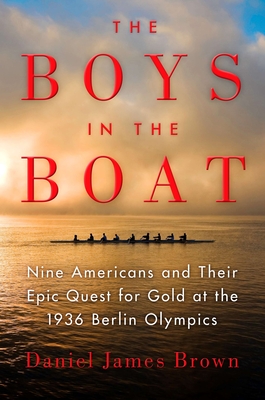


Before this book, I didn’t have any stories or ideas tied to rowing.

In fact, before reading The Boys In The Boat, if you’d asked me, “What’s less interesting than competitive rowing?” I would have said, “Nothing! What else can we talk about?”  But I had similar thoughts about horse racing before reading Seabiscuit, about running the mile before reading The Perfect Mile, about running in general before reading Bowerman And The Men Of Oregon, and about the history of Formula 1 racing before reading The Limit.  

But of course, these books were great not because of the sports they profiled, but because of the people involved.  

Not only is Brown’s book interesting, It’s thrilling, and he’s a fantastic writer.  The people in the story are a pleasure to know.  I can’t remember the last time I enjoyed a book about sports and competition this much.  If you like stories about scrappy underdogs beating the odds, this is the book for you.
...............................................................................................
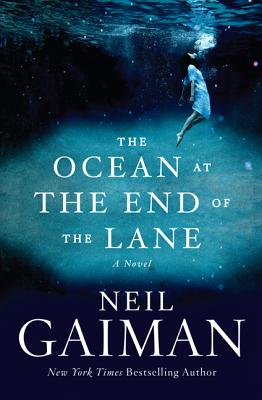
 

Someone recently asked me what the best part of being a debut author with an upcoming book. “Getting a sneak peek at Neil Gaiman’s new book,” I said immediately. And truer words have never passed my lips.

If I’d read The Ocean At The End of the Lane as a child, I don’t know if I ever would have recovered. This book contains what might be the most terrifying scene I can think of for a young boy.  When you get to the bathtub scene, you’ll know what I’m talking about.  My favorite thing about Gaiman is that he tells stories of impossibly strange worlds, while hinting at worlds behind the stories that are more unusual yet.  Ocean is a masterpiece of potent, concise thrills.

This is Neil Gaiman, so...you’re probably going to read it no matter what the story is. But okay, the plot:  A young boy unleashes a creature from another world and gets into a world of trouble.  That might sound like a story that could have come from any writer, but if you know Neil, you can guess that it’s not.
...............................................................................................

The Never List by Koethi Zahn

I read The Never List in one night and stayed up too late doing so. In the early pages, two women are abducted. They awaken in a cellar, shackled to the walls with two other women.  Three years later, our narrator escapes. The story picks up years after that and involves her abductor’s potential parole, the letters he is sending to her and his other victims, and a cult that would have fit right into a season of Dexter. The Never List  reminds me of Chelsea Cain but not as gruesome, and Gillian Flynn without the sick humor.  If you can have fun with an ugly, nasty story, check this out. You know who you are.
...............................................................................................

Gulp by Mary Roach

In her inimitable style, Roach has previously tackled the cadaver, the soul, sex, and everything you wanted to know about space travel but were afraid to ask.  With Gulp, she goes down the hatch.  This book contains just about everything you’d never want to know about what’s happening inside of you.  It’s fascinating, disgusting, and as Roach fans will already know, hilarious.  My only complaint?  I can’t believe she took this internal tour and never even mentioned the tapeworm. 


...............................................................................................

I could go on and on and on, but now I’d like to turn it over to you.  I’d be grateful if you’d head over to my blog or send me a Tweet.  Let me know what you’ve read and loved lately! 

See Josh Hanagarne discuss his book The World's Strongest Librarian: A Memoir of Tourette's, Faith, Strength, and the Power of Family ($26.00) with librarian Shereen Ash at the Fairfax library on Tuesday, May 21 at 7:00pm. Click here for more details.
 

Tuesday, August 5, 2008

Joyce Goldstein Presents Mediterranean Fresh

by Barbara Adams

Spend an evening with celebrated chef and prolific writer Joyce Goldstein and you'll see why she is known as the American master of Mediterranean cuisine. Read one of her cookbooks, and experience her passion and ability to teach and inspire readers. Eat a meal prepared from her new book, Mediterranean Fresh: A Compendium of One-Plate Salad Meals and Mix-and-Match Dressings, and you'll be a fan forever.

Earlier this week Goldstein returned to Cooks with Books at the Left Bank Brasserie for her fifth event--becoming one of the series' all-time most popular guest authors. Working closely with Executive Chef, Scott Howard, she offered a menu that celebrated the summer bounty and introduced guests to the simple beauty and flavors of well prepared Mediterranean salads.


I arrived early, ordered a glass of wine at the bar and took up residence at a small sidewalk table to peruse the book while unwinding from a hectic work day. Soon the outside world faded as I became absorbed in Goldstein's Mediterranean world. I learned that she originally developed a course on salads for students at the Culinary Institute of American in Napa Valley, then expanded it for her readers. The goal: to get cooks away from the salad bar mentality, encouraging them to try new combinations and ingredients and always taste, taste, taste before pairing.

When the guests began arriving I headed in to get my book signed. Goldstein was seated at a small table inside an intimate dining room welcoming guests, posing for photos and answering questions. I looked forward to meeting her and was thrilled to learn that I'd been seated next to her at dinner. Our table was filled with foodies, writers and a food photographer all getting to know each other. Goldstein finished up her signing duties and joined in our now-lively conversation.

The first course arrived--the "amuse" ("Amuse bouche" is a French term for a tiny first course, literally "to amuse the mouth")--a fluke carpaccio beautifully arranged with tender young greens and mustard shallot dressing. One guest noted that she'd had beef carpaccio, but not tried it with fish. Both of us were pleased as we dipped the mild buttery soft slices of fish into the tangy dressing then went for the crunchy radish slices and peppery greens. I wanted to know what other types of fish worked in this recipe. Goldstein told us, "I usually prefer ahi tuna but Chef Howard has done a very nice job here. You could also use Alaskan halibut or salmon."

Our Spanish-influenced appetizer of chickpeas with squid and chorizo arrived and quickly became one of my favorite dishes at these events. Truthfully, I'd been a bit apprehensive about the combination but was quickly won over with the beautiful colors, textures, and how the tomato vinaigrette tied all the flavors together. Chef Howard surprised us by using fresh green chickpeas that he'd found at the market earlier. Goldstein smiled and let us know "this is really a treat as they are often difficult to find. That's why I call for dried chickpeas in the recipe." Most had never eaten fresh chickpeas and enjoyed the raw crunch they added to the squid and chorizo. Goldstein told everyone that they grew in pods and had to be shelled--a bit labor intensive but well worth the effort.

Throughout dinner, Goldstein regularly took the microphone and talked about the dishes and their ingredients, enriching our experiences with back stories only she could provide. We learned that when training restaurant staffs she begins by setting up a tasting session that includes all of the salad ingredients and dressings on the menu. She's found that most novices don't understand that there is a correct way to pair salad ingredients, and not everything goes together blindly. For example, raspberry vinaigrette appears on many menus but seldom works with standard fare, so why is it included? "Read the book," she enthused. "Read it, use it and you will master salads and dressings."

Chef Howard prepared roasted chicken for the main course and paired it with Goldstein's seasonal tomato and peach salad. As chef at the Cafe at Chez Panisse and at her own award-winning Square One Mediterranean restaurant in San Francisco, Goldstein always demanded first-rate ingredients and helped pioneer the use of seasonal, locally grown produce and ingredients. This meal--especially the tomatoes and peaches--showcased the importance of her philosophies. The celebration of summer continued as chef sent our summer galette of puffed pasty, plump apricots, and fat, juicy blackberries drizzled with creme fraiche.

The evening wound down with both spirits and tummies well nourished. I picked up my copy of the book and knew that the adventure into Joyce Goldstein's world of Mediterranean cuisine had just begun. Inspired, my mind raced: what recipe should I make first? Fattous salad with pita bread is a tempting possibility for tomorrow's dinner. Or, am I feeling really adventurous? Mussels with potatoes and saffron mayonnaise is definitely on my radar. Oh, the possibilities...stay tuned!

Get a printable recipe of Joyce Goldstein's Fish Carpaccio with Mustard Shallot Citrus Dressing!

Check out Barbara Adams Beyond Wonderful: Adventures to Savor

Monday, July 28, 2008

The Writing Life: the Secret of Book Store Readings

by Kemble Scott

Years ago when I was working on my first novel SoMa, I went to a reading at Book Passage by Augusten Burroughs. He was internationally famous for his memoir Running with Scissors.

I enjoyed that book, but what I really wanted was to meet an author whose work I felt was similar to mine. I don't write memoirs, but in a very broad sense I considered us in the same genre of books: weird.

SoMa is a weird book, and so is Running with Scissors. Both have fairly graphic content, mixed with a twisted sense of humor. Since Augusten was so enormously successful, I figured there might be something I could learn from him.

There was a big crowd, filled with fans. I bought a book and made sure I was the last person in line for him to sign. I told him I was an aspiring writer, and he asked me about my work. We probably spoke for a good ten minutes. He ended the conversation by giving me what seemed like odd advice at the time. "Make sure your first novel is published as a trade paperback."

I didn't even know what a trade paperback was. How is that different than a regular paperback?

Years later when Kensington offered to buy SoMa, the editor explained that they wanted to publish it as a trade paperback. My heart sank a little. Silently, I was incredulous. Paperback? Wasn't I going to get a big hardcover book that I could show off to all my friends?

Then I remembered what Augusten said, and I did a little homework. It turns out that Augusten's first book was a novel, and it was published as a trade paperback - a soft cover version of a full-size book. Why? Because he was a complete unknown then, and his publisher figured that readers might take a chance on him at $15, whereas a hardcover at $25 might be too much to ask. The strategy paid off, and his first novel did well enough to have his editor ask him if he had any other books he wanted to write. "Well, I had this unusual childhood..."

If I hadn't met Augusten that day and heard his then-mysterious advice, my enthusiasm for my first book would have been dampened. Instead, I embraced the publishing process and tried to learn the rest of what I clearly did not know. SoMa ended up becoming a bestseller, even as a trade paperback. And a division of the Doubleday Book Club bought the rights and published another edition of SoMa: as a hardcover!

Writers who are serious about getting their books published should get out to readings and meet their favorite authors, especially those who are writing similar books. Ask about their journeys to publication. You'll undoubtedly learn something. Even if nothing strikes you as significant at the moment, you might be like me and discover years later that you'd received a pearl.

I'm such a strong believer in the power of this type of shared wisdom that I publish a weekly newsletter designed to connect people to authors. It's the San Francisco Bay Area Literary Arts Newsletter. It's my selection of the coming week's top book and author events, delivered in one convenient email each Friday morning. Once you sign up, you don't have to remember to do anything. It simply arrives.

The newsletter also includes links to all literary events categorized by city, town and neighborhood. Subscription is free. There's also an online version, for those who don't like email.

Kemble Scott is the author of the bestselling novel SoMa. He is the editor of SoMa Literary Review and the SF Bay Area Literary Arts Newsletter. His next novel is called Phage.

Friday, July 25, 2008

The Writing Life: The Cold Hard Truth About Writing Groups

by Kemble Scott

I started my journey as an author by writing short stories about the weird events I'd seen after moving to San Francisco. I was living in the South of Market neighborhood, before the high-rise condos and beautiful ballpark. Dot-com was in its infancy. The streets were full of mischief, much of it x-rated.

Those tales would later inspire me to write my debut novel SoMa. But back then I really needed feedback to know if I was succeeding as a writer. I found a writing group and presented my stories.

One woman was so appalled, she created a scene by sticking her fingers in her ears whenever I read.

Nice, huh? That wasn't exactly constructive criticism. If I'd taken her response to heart I probably would have given up. I left that group and tried a couple others, until I found one that was a match for me.

It's a cruel fact that some people use writers groups as a platform for attacking the work of other writers. According to her son, author Anne Rice once attended a writing group in San Francisco. She was rebuked for wasting the group's time with her stories about vampires. Rice moved to New Orleans, where she apparently found a more supportive environment, and published Interview with the Vampire. She has millions of fans and has inspired countless writers.

So how do you find a writers group that will help, rather than hurt?

Try the San Francisco Writers Workshop. It's held each Tuesday night at 7 p.m. sharp in the basement of the Meridian Gallery near Union Square in San Francisco. Map.

The workshop is free and open to anyone. Fiction, non-fiction, memoir, poetry – maybe even that book proposal you've been working on. Writers read their work aloud, up to six pages double-spaced, and get instant reaction from their fellow writers.

The group is facilitated by Tamim Ansary, the acclaimed author of the memoir West of Kabul, East of New York, which just got the honor as San Francisco’s One City One Book selection. He manages to keep the discussion helpful.

The list of authors who have put their books through the workshop is impressive. Just to name a few: David Henry Sterry, author of Chicken - Joe Quirk, author of The Ultimate Rush - Erika Mailman, author of The Witch's Trinity - Khaled Hosseini, author The Kite Runner - Michelle Gagnon, author of Boneyard - Melodie Bowsher, author of My Lost and Found Life.

Those are just some of the most recent crop. What makes the workshop especially amazing is that it's been meeting continuously since 1946!

You don't need to sign up in advance. No one takes attendance. You decide your commitment level.

Then after each session the writers gather at a nearby bar and mingle. Many great friendships have been forged here. I met authors who helped me when I first started, giving me the inside advice that led me on the path to publication.


There's another great resource for meeting other authors, some of them world famous. I'll give you the key to a treasure trove of advice in my next, final installment in this series.

Thursday, July 24, 2008

The Writing Life: It Takes a Village, People!

by Kemble Scott

It's been said that the odds of getting a debut novel published are about the same as winning $25,000 or more in the lottery.

I don't know if the chances are quite that slim, but ask any aspiring writer and they'll tell you it's no cake walk. Most publishers won't even look at your submission unless it's represented by an agent. Getting a smart, competent literary agent is nearly impossible. Actually, getting a stupid, incompetent agent is hard too!

One way to greatly improve your odds of being published is to become part of a community of writers. You'll learn from people who have already gone through the same process. If you think writing a book is tough, try reducing your brilliant tome down to one attention-getting paragraph. That's what you'll need to do to pitch your work. Writers help each other overcome these obstacles. You may even make the connections that lead to an introduction to a terrific agent or editor.

In the Bay Area, we're lucky to have all sorts of organizations and groups that welcome aspiring writers. You don't need to have an MFA, and few (if any) require a litmus test.

Here are just a few of the many opportunities...

Left Coast Writers and The Writing Mamas Salon both operate out of Book Passage. These groups are run by seasoned pros with regular meetings. Your game will be immediately elevated.

The California Writers Club has branches throughout the state and offers up-close access to experts willing to share their knowledge about publishing.

Conferences are great way to meet a lot of writers and industry professionals in a very short amount of time. Book Passage is famous for launching careers at its conferences for Mystery Writers, Travel Writers and Children's Books Writers and Illustrators. The San Francisco Writers Conference happens in February, and a spin-off for non-fiction writers called Writing for Change is just ahead in August.

There are also two terrific organizations where you can volunteer and find yourself planted deep in the middle of a forest of great writers. 826 Valencia in San Francisco tutors inner-city kids with their reading and writing. You'll be working along side other authors, including founder Dave Eggers.

I volunteer my time over at Litquake, San Francisco's literary festival. From October 3 to 11 this fall, more than 350 authors will participate in readings and performances. There are dozens of venues that will need volunteers. Planning work is done year round, so you don't have to wait until the event to get involved.

The Executive Director of Litquake is Elise Proulx. She happens to also be one of those smart, competent literary agents that are oh so rare.

See how it all comes full circle?

Of course, getting your work to the point where you feel confident it's ready for publication is also a challenge. Joining a writers group can help, but they are not always easy to find. In my next posting, I'll tell you about a very successful writers group that will critique every word of your work.

Wednesday, July 23, 2008

The Writing Life: What the heck is a writers' grotto?

by Kemble Scott

Probably the most popular image of a writer has some angst-ridden guy sitting next to an ashtray overflowing with cigarette butts in a sparsely furnished room with a lone light bulb dangling from the ceiling. It's a solitary life, with despair in every letter punched on the keyboard.

Yikes.

Many writers are choosing a different path and gathering into communities. Here in San Francisco I'm a member of the Sanchez Annex Writers Grotto. It's a workspace where ten of us share the rent and have little offices where we come to write.

What's amazing is how we're all writing in very different genres. In the fiction world, we have Sean Beaudoin. He's got one young adult novel out, and other on the way. Shana Mahaffey just sold her first novel to Penguin's New American Library, which will be promoting it to women's book groups. Michelle Gagnon has a new serial killer thriller that just came out called Boneyard.


On the non-fiction side, Michael Chorost won the Pen/USA award for his memoir. Paul Linde is the house psychiatrist who has written about treating AIDS patients in Africa, and he's got another book in process. Alison Bing writes witty travel guides for Lonely Planet. And Raj Patel is the internationally best-selling author of Stuffed and Starved, a new and very timely book about the world food crisis.

We've even got someone in the movie business: screenwriter Diane Weipert. Her first feature film was shown at the Sundance Festival.

Ammi Emergency just joined us. She's known for her short stories and essays, and is one of the latest recipients of the prestigious Stegner Fellowship at Stanford.

And then there's me with my edgy first novel SoMa, and my next novel Phage in the works.

So what happens in our community? Do we critique each other's work?

Nope.

Do we have workshops? Visiting scholars? Readings?

Nope. Nope. Nope.

Because we all work on such different projects, the Grotto isn't so much a place for collaboration as it is for perspiration. We all come here to work side by side. Somehow, by having a place where creation is the sole mission, there's a vibe that happens. Maybe it's because we're part of writing community that there's a group dynamic that happens. When you're at the Grotto, you feel compelled to write.

Artistic and creative communities have existed for hundreds of year, but you can thank author Po Bronson and his colleagues for adapting it to the writing world and bringing it to our city. Po started the San Francisco Writer's Grotto. This inspired our founder Doug Wilkins to create our workspace here in The Castro. There's also a grotto over in Oakland.

While we don't write each other's books, we do help one another with the business of publishing. My next novel was never pitched by a literary agent, or subjected to the traditional submissions process. Instead, one of the authors here took it directly to his publisher. A few weeks later, I received an offer.

Something like that would have never happened if I was that guy sitting alone in his room with one light bulb swinging over his head.

You don't have to rent office space at a grotto to enjoy the benefits of being part of a literary community. There are many other ways to connect, which can be crucial to a writer's chances of being published. I'll share those in my next posting...

Tuesday, July 22, 2008

The Writing Life: The Math EquationThat Determines Success as a Writer

by Kemble Scott

Lots of people aspire to write books, but not everyone can get the job done.

As I've traveled to Book Passage and other venues to talk about my debut novel SoMa, I'm often asked about my "writing process." Author K. M. Soehnlein told me it's one of the top three** questions all writers are asked when they are on tour. Karl was right.

Turns out, the "writing process" can be demystified by a simple mathematical equation. I can't recall who first passed this brilliant analysis along to me, but it is undeniably true.

It's called The A/C Ratio.

A = Ass

C = Chair


Yup, it's that simple. The more time you spend with your Ass in a Chair in front of a keyboard, the more likely you are to write something. ☺

When I was single, I used to write at home. My A/C ratio was very high. Then love struck and I was no longer alone with my Ass and Chair. I soon discovered that I needed to "go to work" in order to get back into the writing groove. That meant leaving my home and setting up shop somewhere else.

I didn't have a quiet, sacred spot to write. Mostly I'd go to busy cafes, and sometimes the library. But there was something incredibly motivating about putting my laptop and notes in my backpack, and hauling my Ass to a Chair where the expectation was to write. It was like I was going to a real job, which (of course) writing a book is.

These days I do my work at a writers' grotto in San Francisco. What the heck is that? I'll take you there in my next posting...

**The other top two questions I get are: What's your social security number? What's your mother's maiden name?

Monday, July 21, 2008

"Sex" for a Good Cause

by Kemble Scott

We're definitely a nation of doubters, especially when it comes to books. Authors who write memoirs are inevitably accused of making things up. And readers often suspect novelists are just offering thinly veiled portraits of themselves.

Fact is fiction, and fiction is fact.

I learned this firsthand when my first novel SoMa came out. It's set in San Francisco's gritty South of Market neighborhood and follows young people on a journey of thrills and self-discovery, much of it involving sex. Even though it's clearly labeled fiction, people believed it was my own personal story.

"You seem to know an awful lot about this SoMa sex stuff," they'd say, followed by a raised eyebrow, a smirk, and maybe a nudge.

Before writing fiction, I worked in journalism. In all those years, I wrote countless stories about murders, and yet no one ever said, "You seem to know an awful lot about that murder," as if I had committed it.

Sex is different. If you write about it, it must be some sort of unnatural obsession. Forget the fact that sex is where we all started (what, you were cloned?), if you write about it, there must be something pervy about you.

Well, sex in literature is finally getting its due. A tribute, no less!

On Sunday, August 3rd, Litquake - San Francisco's Literary Festival - is hosting Dirty Words: Litquake's Tribute to Smut.

There will be readings and performances by many talented, wonderful writers who have included sex in their books. You'll get to see a different side of Daniel Handler, otherwise known as the world famous children's book phenom Lemony Snicket.

A dirty Snicket? Interesting...

And then there's Ellen Sussman, who has put together a new literary encyclopedia of sex. She's a best-selling novelist, mom of two girls, and she can tell you what the expression "dirty sanchez" really means.

There will be a fashion show, Burlesque, food and drinks, and the Georges Bataille Egg Tossing Contest (okay, I made that last one up).

Best of all, it's "sex" for a good cause. The event is Litquake's annual fundraiser. The festival attracts 10,000 each fall, with most events completely free. Volunteers work year-round to put it all together, with help from places like Book Passage, one of Litquake's earliest supporters. But the festival also needs cash, and the money raised from Dirty Words will go to paying the bills.

Details:
Dirty Words: Litquake's Tribute to Smut
Sunday, August 3
Doors open at 7 p.m.
Readings and show begin at 8 p.m.
CELLspace, 2050 Bryant Street, San Francisco
Admission: $25, which includes two drinks
Advance tickets strongly recommended:
https://www.brownpapertickets.com/event/38342

I'll be there. I'm really looking forward to hearing Daniel Handler read a sex scene (no, not from Lemony Snicket, but from one of his grown-up novels). And I'll do my best not to say to him, "You seem to know an awful lot about..."

Thursday, July 10, 2008

Book Reviews ... and a Literary Reality Show?

by Julia Flynn Siler

In the fall of 2007, the Columbia Journalism Review (CJR) ran a lengthy essay by Steve Wasserman, a former editor of The Los Angeles Times Book Review, titled "Goodbye to All That."

It offers a fascinating glimpse into the dire state of newspaper book review sections and Steve began by tallying the vanishing coverage at major newspapers. To darken the picture even further, he then went on to correlate that with the exploding number of books published every year.
magoo2.jpg
Mrs. Magoo readies for her closeup; next stop, stardom as a cyber-TV celebrity book critic?
(Photo courtesy Mrs. Magoo)

In the mid-1980s, he reported, about 50,000 books a year were published. Today, the total is three times that number. But the pages devoted each week to reviewing books has steadily shrunk, with entire sections folding in the wake of anemic ad revenues from book-related advertising. During the time that Steve edited the Los Angeles Times Book Review, from 1996 to 2005, the section lost about $1 million annually, he wrote. The New York Times Book Review, likewise, has lost money for years and likewise remains a loss-leader for the paper, he reported.

While book review sections in newspapers have been gasping for breath, the fresh air of the blogosphere has encouraged a healthy explosion of literary blogs. And one of my favorites is a blog called "Mrs. Magoo Reads."

Visiting her website, you'll find that Mrs. Magoo has been a very busy lady in recent months. She's reviewed dozens and dozens of books and movies, and also interviewed more than a dozen authors. Her voice is fresh and her taste in books and movies leans towards the classics.

You might also notice that Mrs. Magoo seems to love young adult literature. And that makes sense, considering that she's a precociously bright 12-year-old who's just finished seventh grade.

Mrs. Magoo doesn't mention this fact on her site, as is her prerogative. But she does mention the media attention she's about to get. This Friday, "View From the Bay," a weekly television show broadcast on the San Francisco Bay Area's ABC Channel 7/KGO-TV, will present a segment on Mrs. Magoo and her family (including a shot, my sources tell me, of her father making his famous chocolate chip pancakes).

The episode airs Friday, July 11th, from 3 to 4 p.m. PST. I'm planning to tune in, since I've had the great pleasure of knowing Mrs. Magoo since she was a four-year-old. Her mother, Liz Epstein, is a book group moderator who runs "Literary Masters," a new company in the San Francisco Bay Area.

No wonder the Epsteins joke that their next step as a family is a literary reality show! And Mrs. Magoo's enterprise in setting up a website, encouraging writers and publishers to send her their books, and interviewing authors, is a good sign for those who worry that our kids aren't reading as much as we did.

Not everyone thinks much of the literary blogosphere. One of the most amusing parts of Steve Wasserman's CJR essay is a reference to one critic's decrying of "hairy-chested populism," promoted by the rise of blogging.

"Criticism -- and its humble cousin, reviewing -- is not a democratic activity," according to the critic quoted by Steve. "It is, or should be, an elite enterprise, ideally undertaken by individuals who bring something to the party beyond their hasty, instinctive opinions of a book (or any other cultural object). It is a work that requires disciplined taste, historical and theoretical knowledge and a fairly deep sense of the author's (or filmmaker's or painter's) entire body of work, among other qualities."

Try telling that to Mrs. Magoo. But then again, she's probably too busy reading books and reviewing them to sit still for such nay-saying.

Julia Flynn Siler is the author of the New York Times bestseller The House of Mondavi. She will host a wine tasting and talk about her book at Book Passage at the San Francisco Ferry Building on Sunday, July 13th, at 2 p.m. For more information, please visit: www.juliaflynnsiler.com.

Wednesday, July 9, 2008

The Wednesday Sisters and the Writing Life

by Julia Flynn Siler

For anyone who has ever dreamed of becoming an author, Meg Waite Clayton's website is a delightful and inspiring place to visit.

Meg is the author of the bestselling novel, The Wednesday Sisters, a book about a group of women friends. They meet at a park in Palo Alto, California, in the late 1960s and form a writers' circle. Along the way, as the war in Vietnam rages, American astronauts land on the moon and the Women's Movement challenges much of what they think about themselves. They support each other through changes in their personal lives brought on by infidelity, longing, illness, failure, and success.
wednesdaysisters.jpg
meg.jpg
Meg Waite Clayton and her creation.

I loved Meg's book in part because I was born in Palo Alto in the 1960s and the book helped me imagine what my own mother's life might have been like at the time. I also loved The Wednesday Sisters because it celebrates the strong bonds and support that can be provided by a good writers' group. And I am lucky to be a member of two such groups that helped me navigate the often treacherous waters leading to publication.

Long before I began the Wall Street Journal article that led to my book, The House of Mondavi: The Rise and Fall of an American Wine Dynasty, I joined a long-standing group of women nonfiction writers who usually met every two weeks in San Francisco's Noe Valley. We came to call ourselves "North 24th," because we'd usually meet north of 24th Street.

The writers of North 24th read and edited many chapters of my book, talked me through the steep reporting hurdles I faced, and provided encouragement at the times when I doubted whether I could complete the project. We've also become close friends, helping each other through such life events as the death of a parent.

The other group I joined was at the invitation of Meg: a group of published women authors called "Word of Mouth -- Bay Area" (WOM-BA), which was modeled on a group that began in New York. From the Wombistas, I gained insight into a world I was about to enter -- the world of the author (versus the writer) with its unique set of challenges, such as literary agents, marketing and choosing the right projects.

Most importantly, the WOM-BA group offered support in the form of a daily online conversation, as well a network of supportive author friends. This coming Thursday night, July 10th, the founder of WOM-BA, Ellen Sussman, and a group of contributors to the new anthology she edited, Dirty Words: A Literary Encyclopedia of Sex, will read at Book Passage at the San Francisco Ferry Building at 6:00 p.m.

I went to a reading for the last anthology Ellen edited -- and the event truly was more like a party than a staid old book talk. Tomorrow night's event will feature Meredith Maran, Kim Addonizio, Helena Echlin, and Thaisa Frank reading from a collection that NPR, in a recent rave review, called "... a lewd but undeniably stimulating collection ...". It should be a memorable evening.

The following night, July 11th, Meg will be talking about The Wednesday Sisters at Book Passage in Corte Madera. I and fellow Marin Wombista Martha O'Connor, author of The Bitch Posse, will host a reception beforehand, so please join us at 6:30 p.m. on Friday to raise a glass to Meg and her success.

But it's time to get back to Meg's website. If you're a writer looking for tips on how to begin your novel, or perhaps organize the mounds of research you've gathered, go to Meg's page on "Writers" and scroll around the desktop for inspiration. My favorite idea is to be found by clicking on Meg's red Dell computer: her "first-draft-writing-rule" of writing either 2,000 words or working until 2:00 p.m. (when her sons got out of school). Meg shared this with me several years ago, and I adopted a version of it that helped me keep disciplined as I wrote The House of Mondavi.

The other discovery on Meg's site is her marvelous blog called "1st Books: Stories of How Writers Get Started." That's surely a question I'm asked at nearly every one of the dozens and dozens of book events I've done over the past year: How did you get the idea for your book? Find out the answer from writers such as Michelle Richmond, Brenda Rickman Vantrease, and Meg herself. Check out the book trailer for The Wednesday Sisters, as well. It's fun.

Julia Flynn Siler is the author of the New York Times bestseller The House of Mondavi. She will host a wine tasting and talk about her book at Book Passage at the San Francisco Ferry Building on Sunday, July 13th, at 2 p.m. For more information, please visit: www.juliaflynnsiler.com.

Tuesday, July 8, 2008

King Lear and The House of Mondavi

by Julia Flynn Siler

What can Shakespeare teach us about a troubled family business?

That's a question I'll try to answer at a discussion hosted by a long-lasting and large book group in Burlingame, Calif., this fall. Over the summer, the group has decided to read Shakespeare's tragedy, King Lear, alongside my book, The House of Mondavi: The Rise and Fall of an American Wine Dynasty.
rmking.jpg
Photo of Holm from the University of London; photo of Mondavi by Mike Kepka/SFGate.com

To prepare myself for the evening, I've checked out the DVD of the Royal National Theatre's celebrated production of King Lear with Ian Holm (which I had the great fortune to see performed in London in 1997) from our local public library. I've also checked out the Cliff Notes on King Lear, as well as the text of the play itself (the Pelican Shakespeare edition of the 1608 Quarto and 1632 Folio Texts).

King Lear is a heart-wrenching play that has stayed with me for years, ever since I saw Holm on a stage in London perform the storm scene, tearing off his his clothes, railing at the fates, and conveying the madness of his character with searing intensity.

Early on in my research for The House of Mondavi, I came across articles that compared Robert Mondavi to King Lear. So as I chugged north from San Francisco in my Volkswagen station wagon to the Napa Valley, I listened to BBC recordings of the play on cassettes to help try to understand the parallels.

Like King Lear, Robert Mondavi, too, was an aging king seeking to pass his kingdom onto his children. In King Lear's case, he sought to prevent conflict at the start of the play by dividing his kingdom into three parts, to be parceled out to his three daughters, after they each declare their love for him -- a so-called "love test."

His two older daughters exaggerate their love, flattering the old king, while his youngest, Cordelia, tells him she loves him, but only as a daughter should love a father. Lear, hurt by Cordelia's honesty, disinherits her and divides the kingdom between his two older daughters instead.

Lear quickly realizes that, in his effort to assure a smooth succession, he has, in fact, laid the groundwork for bitter enmity among his offspring and war in the kingdom. He rails against the betrayal of his daughters, uttering the famous line: "How sharper than a serpent's tooth it is to have a thankless child."

Running parallel to the story of King Lear and his three daughters is the story of the Earl of Gloucester and his two sons -- one legitimate and the other illegitimate, and thus, disinherited.

In one sense, King Lear is a tragedy that explores the relationships between two fathers (Lear and Gloucester) and their offspring. Like The House of Mondavi, King Lear has plots and sub-plots involving betrayal and an inheritance battle. In the case of the Mondavi family, the battle involved a billion dollar global wine empire.

King Lear is also a study of king felled by hubris: It is his false pride that leads him to believe the empty flattery of his older daughters and to reject his worthy daughter, Cordelia. King Lear allows his excessive pride to destroy his family.

The House of Mondavi also explores issues of pride and hubris leading to a fall. It, too, is a tragic story, resulting in the forced sale of the family's kingdom and long-lasting estrangement between family members.

There are plenty of differences, as well, of course. But I expect to learn a lot more after taking part in what's sure to be a fascinating book group discussion this fall.

Julia Flynn Siler is the author of the New York Times bestseller The House of Mondavi. She will host a wine tasting and talk about her book at Book Passage at the San Francisco Ferry Building on Sunday, July 13th, from 2 to 3 p.m. For more information, please visit: www.juliaflynnsiler.com.

Literary Salons and Book Groups

by Julia Flynn Siler

If there is a modern American equivalent to the French salons of the 17th and 18th centuries, it may be found in the thousands of book groups that gather regularly across the nation in living rooms, public libraries, and local coffee houses to discuss literature and ideas -- often passionately, and with a great deal of wine and laughter involved.

For those who complain that America has become a nation of non-readers, don't try telling that to my book group, which began eight years ago and has remained sturdily and stubbornly afloat all this time. Some of our original members have dropped, to be replaced by others along the way. But we've almost always had a large group of about eight to 10 members, all of whom are mothers who love books.
epsteinLiz.jpg
Book lover Liz Epstein guides groups through the classics; below, at Book Group Expo, panelists Sara Davidson, Po Bronson and Elizabeth Gilbert interact with moderator Sam Barry -- and the book group community.
bge2.jpg
Top photo from bookpassage.com; bottom photo from fora.tv

I helped found our group with my friend Liz Epstein. Like me, she had recently returned to the U.S. after living overseas for many years. Although we both lived in London during the 1990s, we never met each other there. It wasn't until our first-borns enrolled in the same kindergarten class that we realized we had a lot in common -- including both feeling culture shock after returning home to the States.

The book club we formed as a result helped reduce some of that shock, partly through the friendships we formed but also by reading wonderful British fiction together, such as Monica Ali's Brick Lane. Since those early days, Liz has gone on to earn a Masters' in English Literature and to launch a business moderating book clubs called Literary Masters.

Liz's goal is to fill the gap between those frustrating reading groups that tend to devolve from a discussion of the book into a gossip session and university classes where people have to write papers and do homework. In other words, she's running discussion groups for serious readers who also want to have fun. Her group this fall at Book Passage -- also called Literary Masters -- will take place on four Wednesdays, from 10 a.m. to noon, and the group will read, in turn, Wuthering Heights, The Great Gatsby, Madame Bovary, and Anna Karenina. She's also leading a group on Jane Austen. We've had the good fortune of reading many of Miss Austen's books in our club over the years (most recently Pride and Prejudice) and have loved the insights and focus Liz brought to our group.

Liz is a wonderfully gifted moderator, with a sharp wit and great sense of humor. She's great fun but also has an ability to keep us talking about the book. Contact her at liz@literarymasters.net for more information about her groups.

Another marvelous moderator who is organizing a reading group through Book Passage this fall is Pamela Feinsilber, the literary editor of San Francisco magazine. Pamela has put together an impressive line-up of local authors to come talk to her group about their work -- including Anita Amirrezvani, author of the bestseller The Blood of Flowers, and my hero, Adam Hochschild, who wrote the prize-winning nonfiction classic, Bury the Chains.

I joined Pamela's group for her spring session this year and will talk about The House of Mondavi with the group next Monday, July 14th. Please get in touch with Pamela at pfeinsilber@sanfranmag.com if you'd like to join us (and I'll be bringing a couple of bottles of Mondavi and Charles Krug wines to sample, as well). You can find out more about Pamela on Redroom, the new online literary community.

Book groups have become so popular that there's even an annual convention for them. Liz and I traveled together to San Jose, Calif., to moderate sessions at last year's Book Group Expo (BGE), a great event that brings together nearly 1,000 authors and readers for a weekend in October. Who knew there were so many book groups out there? And who knew that publishers and filmmakers these days are trying so hard to woo these groups?

To be sure, my publisher, Penguin's Gotham Books, paid the expenses for me to go to the event in hope that The House of Mondavi would become a popular book group pick. The bet paid off: a number of book clubs have contacted me over the past few months to ask me to participate in their discussions, either by phone or in person.

My Wall Street Journal colleague Jeffrey Trachtenberg wrote a fascinating page-one story shortly before last year's BGE titled: "Book Case: From Hardcover to Paper, How a Blockbuster Was Born -- A Calculated Approach For Eat, Pray, Love," which examined how Elizabeth Gilbert's memoir became a blockbuster. The answer?
"The book's transformation from respectable-selling hardcover to paperback sensation was no accident," wrote Jeff. "It came about after a series of calculated moves from Viking's sister Penguin paperback line, where executives worked to interpret sales patterns and create a marketing blitz to attract individual readers as well as book clubs."

Book club moderators such as Julie Robinson, the founder of Literary Affairs in Beverly Hills, California, also helped pushed Ms. Gilbert's book early on, helping it to gain traction with readers.

Author Khaled Hosseini acknowledged this word-of-mouth marketing power when he opened last year's BGE with an address that profusely thanked the audience, event founder Ann Kent told the New York Times:
"He said that 'The Kite Runner' wasn't being read until book groups got hold of it ... He acknowledged their power in putting his book on the best-seller list and keeping it on the best-seller list. It was pretty profound."

Perhaps Liz Epstein's love of Emily Bronte, Jane Austen, and Gustave Flaubert and Pamela Feinsilber's finely-tuned sense of which contemporary books might become classics will help build a new groundswell of interest for these and other literary masters.

Julia Flynn Siler is the author of the New York Times bestseller The House of Mondavi. She will host a wine tasting and talk about her book at Book Passage at the San Francisco Ferry Building on Sunday, July 13th, at 2:00 p.m. For more information, please visit: www.juliaflynnsiler.com.

Thursday, July 3, 2008

Another Book Passage Mystery Conference Come and Gone

David Corbettby David Corbett

This past weekend, the incomparable Book Passage held its annual Mystery Writers Conference, for my money the best and most collegial writing conference on the planet.

I've been lucky enough to be a member of the teaching staff for the past several years, and each year I come away with even greater respect not just for Elaine and Bill Petrocelli, who own this marvelous bookstore, and their amazing staff (in particular Karen West, the whirlwind), but for the conference's two co-chairs, Jacqueline Winspear and Sheldon Siegel, and my fellow writers who give so generously of their time and have so much insightful wisdom and know-how to impart.

This year in particular, I enjoyed David Hewson's opening lecture on tools of the trade--a much overlooked topic in writing conferences--in which he showed how to use various software programs to assist writers particularly involved in novel writing. (I also shared a panel on Time and Place with David, and I was as always struck by how intelligent, how generous, and how insidiously witty he is. I wish I got to visit with him more often.)

My only complaint about attending David's opening workshop was it was scheduled at the same time as Hallie Ephron's premised on her Edgar-winning how-to book: Writing and Selling Your Mystery Novel: How to Knock 'Em Dead with Style. Fortunately, I get to see Hallie again later this year at the West of Eden Writing Conference.

I again gained deeper respect for Doug Lyle who is not just a genius about forensics but whose remarks on the writing craft are invariably specific, informed, wise and concise.

I got the chance to heckle Don Winslow, who gives as good as he gets. (He did the near impossible: He made me blush.) Don was promoting his new novel, The Dawn Patrol--a book his own website curiously has never heard of. (Don: update the site, come on.)

Don's partners in crime for his two presentations were both Macavity Award nominees--Tim Maleeny (up for Best First Novel for Stealing the Dragon), and Deborah Crombie (one of my rivals for Best Novel for Water Like a Stone, which I have picked for my High Crimes reading group. Deborah is one of the sweetest, funniest, smartest and most charming people I've ever met--not to mention one of the dizziest: She suffered from an inner ear affliction on the final day of the conference, and struggled to make it to the next leg of her western junket in Scottsdale. I'm thrilled to have become Deborah's friend--to the point we've both vowed to root for each other as well as ourselves when the Macavity is actually handed out at Bouchercon in Baltimore.
Deborah Crombie with Shizuka Otake


Photo by David Corbett
Deborah with Shizuka Otake
David with Deborah Crombie


Photo by Shizuka Otake
David with Deborah Crombie

I got to trade a few barbs with Michelle Gagnon as well, whose latest, The Boneyard, has just hit stores to wonderful pre-publication praise. (Michelle also graciously lauded my sex scene in Blood of Paradise during a guest blog appearance on The Lipstick Chronicles--though she described me as "a tease" since the scene in question was the only sexually explicit one in the book.)

Cornelia Read expertly moderated one of the best panels on research I've ever had the good luck to sit in on. This one included the afore-mentioned Ms. Crombie and Dr. Lyle, as well as Craig Johnson (from whom we learned that a police radio call for a 1045 means there's livestock on the highway, among other hot rural tidbits).

Dylan Schaffer joined Tony Broadbent, Jackie Winspear and I as we discussed the need not just to focus on suspense and verisimilitude in crime fiction, but on the emotional cost of violence and the varying ways grief expresses itself, so that the genre doesn't reduce itself to a mere pornography of violence.

Gillian Roberts gave one of the most inspiring, self-effacingly witty and inimitably charming talks about writing and loving it--despite overwhelming odds--I've ever heard.

Oh, and did I mention that John Lescroart kicked off the conference with his as always unerringly droll and savvy take on the writing life, or that Tobias Wolff joined in as well, being interviewed and reading from his new short story compilation, Our Story Begins?

The above merely scratches the surface. I didn't even get to the contributions of Cara Black or Louise Ure, whose presentations I was sadly unable to catch this year, or the many agents, editors, law enforcement professionals and others who make this conference the unique opportunity for aspiring writers it is.

But perhaps the real highlight of the weekend--or lowlight, if you will--was when, at the staff party, I went up to a bespectacled beauty who bore a striking resemblance to the actress Meg Tilly and said, "I bet people tell you fifty times a day you look just like Meg Ryan." Middle-age memory glitch--that was bad enough. But the lady very graciously corrected me, saying, "I think you mean Meg Tilly--yes, I hear that every day."

It was about five minutes later someone let me know the woman in question really was Meg Tilly.

Only David Corbett can pull off a blunder like that.
*****

Books by David Corbett:
Blood of Paradise
Done for a Dime
The Devil's Redhead

Tuesday, June 24, 2008

The Last Book Reading

by Matt Richtel

Tomorrow night, I read at Book Passage, one of the iconic independent bookstores, run by Elaine Petrocelli, one of the industry's true pioneers and titans.

On Monday night (last night), I was supposed to read at another Bay Area book institution, Cody's Books in Berkeley. Supposed to. As you may know, Cody's abruptly closed its doors over the weekend. Herewith is an essay I wrote about my most surreal ever book reading -- on the concrete outside a dead giant.

BERKELEY - In the window of Cody's Books, a venerable independent bookshop, a yellow sign reads "bringing writers and readers together since 1956."

But the iconic Berkeley bookshop, which survived the revolutions and protests that passed before its once profitable doors, abruptly closed up last weekend, without warning, having given in to the titanic foes of e-commerce and chain stores.

So on Monday night, Cody's brought together its very last writer and reader. The writer was me. I was scheduled to give a reading from my thriller, Hooked. Even though I learned of the store's closing on Sunday, I showed up at Cody's Monday night just in case some prospective readers came too, expecting the show to go on.

One reader did. She stood wearing a boiled wool yellow jacket with her arms crossed, reading a white sign on Cody's door explaining management could no longer afford to stay in business.

"Are you here for the reading?" I asked.

She nodded. I introduced myself as the would-have-been reader. She introduced herself as Ralda Lee, a long-time Berkeley resident. She said she'd been forwarded an email invitation from a friend of mine advertising the reading. She'd heard that the store had closed, but that I might be coming by to intercept book-reading attendees caught unawares.

"I wanted to support you," she said. "I know what it's like. I'm an actor."

"So should we do a reading?"

"Why not."

In front of Cody's is a cement bench, in a circle, with flowers and foliage in the middle. Ralda the reader and I sat on the outside of it. I pulled out my book. But before I could commence The Last Reading, she and I started chatting about life.

She told me that she has a son-in-law who had been a reporter many years earlier for the New York Times. She'd said she'd just returned from Valdez, Alaska, where she'd been in play. She'd always wanted to act, but she never quite got to develop her craft,

"But I got married, and then knocked up," she said. Instead of acting, "I sat inside for 50 years."

She described herself as "older than 70," but, with a laugh, declined further specificity.

I told her about my job as a reporter, and that my wife is expecting our first child in September. We talked about how I was trying to figure out how I would balance my own passions - for journalism and writing - and the stress-free love I want to give my son-to-be.

At one point, I got a phone call, which I felt obliged to take because it was from my boss. And when you're a journalist and your boss calls, you answer, even if you're in the middle of inpatient surgery, let alone a book reading. As I talked, I saw her open my book and start to read. When I got off, she looked up at me.

"I'm Hooked," she said.

I said: "Let's do this reading properly."

I took the book from her, and I read a couple of paragraphs. As I did, I felt particularly self-conscious. Instead of reading to a smattering of folks, I was reading to one person, whose eyes I could feel studying me. It was tougher than usual to keep my face in the book, rather than look up and make eye contact.

I, like other readers I know, have a love/virulent hate relationship with book readings. We love the readings. But we live in abject terror the 5 minutes before they start. The terror comes from not knowing whether anyone (other than a spouse) will show up (and the spouse already has heard all the jokes).

Sitting on the cement bench outside Cody's, I was grateful to have met just one reader. Just us two book people, chatting, a reminder of the writers and readers who had gotten together to share a moment, ideas, questions and answers, philosophies, and then go our separate ways.

Sunday, June 22, 2008

An Accidental Thriller

by Matt Richtel

Hooked is an accidental thriller, a shotgun wedding of muse and unsuspecting writer, a product of love and lust but not planning and pre-conception.

I make my living writing short. My day job is with the New York Times, where I write stories of, typically, 1,000 words. I also write a daily comic strip, Rudy Park, where I have only a few words to fill each cartoon bubble.

Until Hooked, it never crossed my mind to write a book. The idea of putting 100,000 words on paper gave me hives.

Then the cafe exploded.

It was the summer of 2003. For reasons I can't really divine, I sat down and wrote the first few pages of a fiction story. In it, a 30-something man (sort of like myself at the time but handsome enough to sell movie rights) is sitting in a cafe in San Francisco's marina neighborhood. The man -- named Nat Idle -- sees a woman's beautiful hand put a note on his table. By the time he looks up at her, she has disappeared at the door. He walks to the door to follow her, and opens the note. It reads: "Get out of the cafe. Now!" the cafe explodes.

Sitting in the rubble outside, Nat finds himself thinking about his ex-girlfriend, who died four years earlier. He often thinks about her because he's obsessed with her memory. But that's not why he's thinking of her at that moment. It's because he recognizes her handwriting on the note.

After I wrote that first half of a chapter, something overtook me. I became obsessed. I had to know what happened to the cafe, and the ex-girlfriend. Was she still alive? Was she saving Nat? Why?

I kept writing. Relentlessly, curiously, tiredly. I was gang-tackled by a group of muses (who kept waking me up at 6 a.m. urging me to write). Five months later, I had a novel. Or, rather, I had its first draft.

In that respect, Hooked was an accidental novel. But it also is an accidental thriller. When I realized I was, in fact, writing a book, I became concerned that, frankly, I didn't know how to write a book. Could I be sure that I would keep the attention of readers? My methodology for so doing was to write short chapters, and end them each with a hook. I'd keep myself and my readers turning the page. There's nothing particularly novel about that idea, but I suppose I wound up doing it to a relatively extreme degree. Chief among the feedback I get from readers is that they have trouble putting the book done until it's finished.

In turn, the book's fast pace wound up becoming -- you might see a theme here -- an accidental marketing vehicle. Bit of background: the conspiracy that drives the book has to do with the fast pace of life in the digital era, and, in part, the addictive lure of technology. I don't want to give away any more than that. But the publisher, the esteemed Jonathan Karp who runs The Twelve, thought that the book's fast pace was a metaphor for the themes the book addresses. We live in a fast paced world, and here's a super fast-paced book that both speaks to the topic and symbolizes it. As Jon put it in a letter to readers, "Written as a subtle commentary on the impact technology has already had on our minds, Hooked represents a fresh approach to popular fiction."

He might be right; he's certainly more right about that than I identified. But before I met him, and before I was thinking of Hooked as the annoying story waking me up every morning at 6 a.m., I might have written that sentence: "The fast pace of Hooked may appear to symbolize the themes within, but, trust us, that's an accident borne of the writer's fear he wouldn't keep your attention."