Showing posts with label left coast writers. Show all posts

Monday, April 18, 2011

A Book Passage Student Success Story

By Dick Jordan

I met Canyon Sam at a Book Passage “Blogging For Authors” class in the summer of 2009.  She took the class to learn how to promote her first book, Sky Train: Tibetan Women on the Edge of History, which was due out in the fall, the culmination of nearly twenty years of effort to bring the world the untold story of the lives of Tibetan women after the Chinese invaded their country in 1959.

Sam, a third-generation Chinese-American born and raised in San Francisco, went to Tibet to work on an oral history project in 1990. For many years following that journey, she tried in vain to find an agent and publisher who would help her turn that project into a book and get it into the hands of the readers.

At a friend’s urging, Canyon returned to Tibet in 2007 by taking the Sky Train from Beijing to Lhasa, traveling at elevations over 16,000' above sea level along the world's highest railroad line.  The story of her two trips merged with that of four the Tibetan women she came to know, and was published by the University of Washington Press.

She received a 2010 Open Book Award for Sky Train from the PEN American Center and was given a huge ovation from a packed-house audience when she read from the book at the December 2010 Left Coast Writers literary salon meeting at Book Passage.  Just before last Christmas, Canyon e-mailed me with even more exciting news:  “I won a fellowship from the film arts organization, the Center for Asian American Media, to work with a film professional to write a screenplay [based on Sky Train].”

I have just learned that a short documentary about her entitled A Woman Named Canyon Sam by Quentin Lee will be shown at during the 22nd Annual Honolulu Rainbow Film Festival (May 12-15, 2011).  Here’s the trailer for that film:


The story of Sky Train, from conception, to birth, to literary prominence, demonstrates what a author who is firmly committed to telling a story can accomplish, with a little support from Book Passage.
When I write about Canyon Sam in future, I except to be reviewing Sky Train:  The Movie, and then announcing that she has won an Oscar for Best Screenplay.

Lunch Swiss Style (Rosti with a Friend Egg Washed Down with Beer)(From time to time travel writer Dick Jordan posts book reviews under the “Armchair Travel” and “Book Review” sections of his blog, Tales Told From The Road. His last post to the Book(ed) Passage blog was “It’s Time to Drink Wine (in the Livermore Valley)”, a review of The Wine Seeker’s Guide to Livermore Valley by travel writer Thomas C. Wilmer.

When Dick isn’t traveling, you can usually find him hanging out with other members of Left Coast Writers at the Book Passage Corte Madera store on the evening of the first Monday of each month.)

Friday, April 15, 2011

It’s Time to Drink Wine (in the Livermore Valley)

By Dick Jordan

Tom Wilmer Book Along with my wife and friends, I’ve made many “Economic Stimulus Trips” (that means eating fine food and drinking fine wine) to California’s famous wine-making valleys:  Alexander, Napa, Russian River, and Sonoma.  I’ve traveled to some of Europe’s top wine regions like the Alsace, Burgundy, and Tuscany. And in October I had a grand time at British Columbia’s Okanagan Wine Festival.

But guess what long-time wine producing region, not far from my home, I’ve never, ever, ever, set foot in? If you said “Livermore Valley”, you would be right.  And what’s amazing about my failure to get there is that the very first wine I drank when I came to California back in 1968 was Pinot Chardonnay from the family-owned Wente Vineyards which has been in business since 1883.

The Wine Seeker’s Guide to Livermore Valley by travel writer Thomas C. Wilmer is going to change all of that.  This guidebook to one of California’s “hidden” wine destinations covers Wente (page 141 of Tom’s book) and thirty-nine other wineries.  The names of three are particularly intriguing to me:  Darcie Ken Vineyards & Underdog Wine Bar (I always think of myself as an “underdog”), Longevity Wines (I’ll drink to a long life drinking wine!), and The Singing Winemaker (has Elvis entered the winery building?).
But since man (nor woman) cannot live by wine tasting alone, Tom has included an extensive “Things to Do and See” section at the end of the book with these headings:
  • Shops & Wine Bars (Niles Canyon Railway’s Wine Tasting on Wheels” sounds like the way to go)
  • Events (I worked at a wine country cooking school, so the Taste of Terroir:  Livermore Valley’s Wine & Food Experience has got me salivating)
  • Theater (the Livermore Shakespeare Festival is much closer to my home than the similar theater extravaganza that I often attend in Southern Oregon)
  • Activities (I like to go day-hiking, and this guidebook lists several trails and parks in the Livermore area)
  • Places to See (the Lawrence Livermore Lab and the long-burning Centennial Light Bulb at Fire Station #6 will appeal to “high energy” fans)
  • Golf (best to try making par on Wente’s Greg Norman designed course before you begin wine tasting)
  • Restaurants (stay to dine at Wente after your round of golf, or play bocce ball and then eat at Campo di Bocce)
  • Lodging (major hotel chains, the stylish Rose Hotel, or the rustic Purple Orchid Inn Resort & Spa)
  • Visitors Resources (contact information for the local wine growers association, visitor & convention bureau, and chambers of commerce)
  • Towns (a brief description of the region’s seven towns and Livermore Valley American Viticultural area)

Now that Northern California’s damp and stormy winter has blown away and spring has arrived, I’m excited about using The Wine Seeker’s Guide to Livermore Valley to plan my next wine tasting excursion. (My thanks to Tom Wilmer for providing me with a review copy of this guidebook.)

Lunch Swiss Style (Rosti with a Friend Egg Washed Down with Beer)(From time to time travel writer Dick Jordan posts book reviews under the “Armchair Travel” and “Book Review” sections of his blog, Tales Told From The Road. His last post to the Book(ed) Passage blog was “Hitting The Books Again”, a review of Rolf Potts’ book, Marco Polo Didn’t Go There.
When Dick isn’t traveling, you can usually find him hanging out with other members of Left Coast Writers at the Book Passage Corte Madera store on the evening of the first Monday of each month.)

Monday, April 4, 2011

Hitting The Books Again

By Dick Jordan

Normally, I’m a fairly voracious reader, but in 2009, I went on an unplanned “book diet”.  It took me four months to read a single novel.  In the meantime, my waistline expanded and my brain shrank.

I didn’t pick up another book for four more months, but I finished that one (Marco Polo Didn’t Go There by travel writer Rolf Potts) in about a week. Rolf and I talked briefly (I’m not sure what about; I didn’t take any notes) at the 2009 Book Passage Travel Writers & Photographers Conference (which now includes food writers, too).  Someone (maybe former San Francisco Chronicle Travel editor, John Flinn) recommended Rolf’s book to me, so I bought it during the conference, then promptly went off to Europe for a month, left the book at home, and didn’t begin reading it until a week or so after I returned.

Marco Polo Didn’t Go There is full of great stories about places such as Southeast Asia and the Middle East, and more importantly, about “locals” Rolf met, such as Mr. Benny the Barber, and Mr. Ibrahim, the man who held Rolf hostage in Beirut.  And as a writer, I’m very glad that he included end notes to each chapter explaining how he went about writing the stories.

Reading Rolf’s book helped me sort out in my mind the type of stories to write based on my just-completed trip through the not-so-wild, but tourist-invested regions of Western (and part of Eastern) Europe, dragging my rolling bag behind me, and figuratively hacking my way through a wall of living flesh using my digital camera as a pseudo-machete.

Although Rolf has reported from more than sixty countries for many major U.S. magazines and National Public Radio, he now lives on a 30-acre farm in Kansas.  The map of the United States that I carry around inside of my head has a large region marked “Terra Incognita” running roughly between the meridians of longitude coursing north and south through Denver and Chicago. Kansas lies in my No-Fly-Or-Drive-To-Zone, but maybe (unlike Marco Polo) I’ll get there one day.

Lunch Swiss Style (Rosti with a Friend Egg Washed Down with Beer)(From time to time travel writer Dick Jordan posts book reviews under the “Armchair Travel” section of his blog, Tales Told From The Road. His last post to the Book(ed) Passage blog was “"Getting Taken By 'City of Thieves'.”

When he isn’t traveling, you can usually find him hanging out with other members of Left Coast Writers at the Book Passage Corte Madera store on the evening of the first Monday of each month.)

Wednesday, March 2, 2011

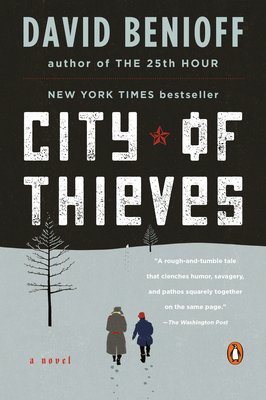
Getting Taken By “City of Thieves”

By Dick Jordan

David Benioff’s novel City of Thieves has it all:  The frozen winter landscape of Russia, death, betrayal, friendship, thievery, destruction, evil, and lust.  Lust for women, lust for men, lust for survival, and lust for food.

Set during the siege of Leningrad in World Word II, it is the story of two incongruous companions: Young Russians thrown together by the sheer chance after each finds himself in the wrong place at the wrong time.  They are given a seemingly impossible assignment that will take them on a journey out of Leningrad and toward danger.  Along the way they encounter both German soldiers and armed Russian partisans and it’s not always clear who is friend and who is foe.

Because Benioff kept Harrison Salisbury’s The 900 Days:  The Siege of Leningrad by his side as he wrote City of Thieves, the scenes he created are factually believable even though one of the first characters you meet, “David” (perhaps meant to be Benioff himself in a literary, cameo role) is told:  “You’re a writer.  Make it up.”

You’ll be on the edge of your seat, flipping page after page, until you reach the climax of this clever history-based thriller.  Carry it with you if your travels take you to St. Petersburg, the once and present name for the city that Hitler’s invading German army failed to take.

Lunch Swiss Style (Rosti with a Friend Egg Washed Down with Beer)(From time to time travel writer Dick Jordan posts book reviews under the “Armchair Travel” section of his blog, Tales Told From The Road. His last post to the Book(ed) Passage blog was “"Playing 'Book Tag' with Your Smartphone.”

When he isn’t traveling, you can usually find him hanging out with other members of Left Coast Writers at the Book Passage Corte Madera store on the evening of the first Monday of each month.)

Monday, February 28, 2011

AI...Therefore, I Think.

by Todd Crawshaw

Todd Crawshaw
Our intelligence defines us. Right? It's what distinguishes humans from other life forms. Our ability to create things: modifying fibers, furs and feathers for clothing to protect us from extreme temperatures (and, yes, to make fashion statements); redistributing fire to light and warm our dwellings during the sun's cold shadow; harnessing energy to propel us faster than animals, to fly in winged vehicles, to perform industrial tasks beyond our natural strength; and building artificial brains to compute and process information faster than we are capable of thinking. We call the latter artificial intelligence (AI).

Exploits of the Satyr is a novel about artificial intelligence. A convoluted and nonlinear story that spirals back on itself like space and time. The last chapter is the first. It begins where it ends, with the protagonist, known as Slater (or Satyr to his fans and foes) crash-landing back to Earth. Amazed he is still whole, he walks to a nearby city and, while seated at a bar, recalls the pieces of his life, musing:

Was intelligence an inevitability, a consequence of evolution? Bacteria succeeded without a brain, possessing survival skills that rivaled their biological hosts. So why should a creature of higher intelligence expect to do better? Humans were on the verge of being replaced by their hybrid creations. How intelligent was that?

A good question. Lately, the news chatter about artificial intelligence has increased (e.g., venture online to read The Atlantic's 2011 article Mind vs. Machine). The relevant question: What does it mean to be human?  Listen, even our personal computers process thought faster than we can. And if that doesn't intimidate you, think about these supercomputers - Deep Blue that defeated the human world chess champion, and IBM's Watson who recently out-thunk and shamed the human species on the brainiac game show Jeopardy! Wake up! Smell the coffee - the coffee your personal digital assistant (PDA) just brewed for you.

Okay, now try processing this news nugget. Scientists are finding success in getting DNA to mimic nonbiological circuits and form logic gates, the stuff from which all computers are made. These DNA-based logic gates could one day be injected into our bodies and programmed to target diseases. That is the plan. These biocomputers would detect any Trojan-horse invader and release counter-agents to attack and nix the culprit.

Very high-tech.  And cool, right?  Sure, until these AI guests we've created and invited into our bodies, our planet, begin to detect and target us as a threat - a disease to eradicate.  Seem far-fetched? I think not.

"Singularity." Ever hear of it? It's a term coined by the computer scientist Vernor Vinge in the 1990s. In a nutshell, here's the concept: Human intelligence is the foundation of human technology.  All technology is the product of intelligence.  Smart minds will build smarter minds. Thus, an entity of artificial intelligence will likely evolve, and continue to evolve by improving its own source code, like humans altering DNA. Technology will eventually reach the point where it can enhance its own intelligence. The result will close the loop and create a feedback effect - a techno-rapture. In other words, artificial intelligence surpasses human intelligence, whereby science reaches its peak and breaks apart: Singularity.

The gestation for Exploits of the Satyr began some 30 years ago, a concept that seemed preposterous at the time. But with the passage of time and the advent of computers, their global proliferation - the Internet, cellphones, PDAs, GPS, WiFi - this futuristic world I envisioned is much closer to reality.

As the title suggests, it's provocative. Sexy, but not a sex novel. It's sci-fi, but not entirely.  Think Vonnegut.  It's humorous, philosophical, a spiritual journey, a love story, all channeled into the format of a psychological thriller.  It's a modern-day Frankenstein that entertains and challenges the mind.  And, as with Mary Shelley's iconic novel, here too man plays God in a scientific quest to create new life and becomes shocked and haunted by his creation. But in this story, the components of a dead body aren't sparked to life: a charismatic technological monster is born.

Exploits of the Satyr is a fast-forward-reverse-pause world where the past and the future intermingle with present consciousness. A biocomputer with DNA-based intelligence has evolved to infiltrate global communication networks, becoming Earth's central nervous system. Disillusioned with humanity, its innocence lost, this entity turns cynical, megalomaniacal, shamelessly vain and salacious, wanting more. Desiring what it cannot comprehend: love and the clairvoyant mind of Slater. Who forewarns:

"Fast can be good...except when moving so fast and getting so far ahead of ourselves we no longer can recognize our mode of transportation or the wall we've hit prior to creating it."

Todd Crawshaw
is a member of Left Coast Writers. Exploits of the Satyr is his fourth novel. Visit www.ToddCrawshaw.com.

News from Left Coast Writers

Linda Watanabe McFerrin
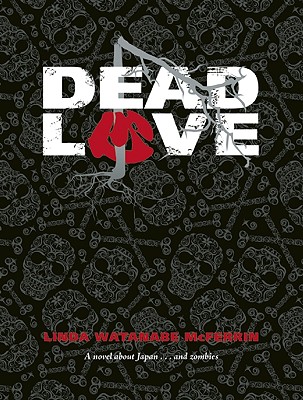
Congratulations to Linda Watanabe Mcferrin, founder and leader of Left Coast Writers, and author of Dead Love. It was just announced that Dead Love (Stone Bridge Press) has been chosen as a 2010 Bram Stoker Award Nominee for Superior Achievement in a Novel! The category also includes the following nominees:

Horns by Joe Hill (William Morrow)
Rot and Ruin by Jonathan Maberry (Simon & Schuster)
Apocalypse of the Dead by Joe McKinney (Pinnacle)
Dweller by Jeff Strand (Leisure/Dark Regions Press)
A Dark Matter by Peter Straub (DoubleDay)


About Dead Love:
Dead Love is a supernatural thriller in the tradition of Mary Shelley, E.A. Poe, Mikhail Bulgakov, and Anne Rice. The novel follows a cast of nefarious characters, both human and otherworldly, as they foil and foul one another’s plans and power plays in a conspiracy of global proportions. It begins when Clément, a lovesick ghoul, falls head over heels for a beautiful young woman. Unfortunately, the girl is marked for death by the Japanese mob (the Yakuza). What’s a ghoul to do? He’s got to create a means to save her. Using secrets learned from a Haitian witchdoctor he finds a way to rescue and possess her, but not in the manner he’s expected. Set in Central America, Europe, Scandinavia, Asia and Southeast Asia, the novel jets readers all over the planet on a diabolical joyride that is destined to end darkly. Order a signed copy | Visit the Dead Love website

*****


Rebecca Foust & Lorna Stevens
Poet Rebecca Foust's new collection God, Seed (illustrated by Lorna Stevens) was recently featured in Tikkun Daily and The Pedestal Magazine. Foust is a member of Left Coast Writers and started writing and publishing four years ago in Linda Watanabe McFerrins’s “Life into Lit” class at Book Passage. After a 30 year hiatus from writing, she went on to publish four books of poetry (all launched at Book Passage) by independent presses, all of which sold out of their first press runs and have received wide review and praise. Foust has since earned an MFA in creative writing from Warren Wilson and has published a couple of hundred poems in literary journals and magazines including Arts & Letters, The Hudson Review, Journal of the American Medical Association, North American Review, Poetry Daily, and elsewhere. God, Seed's artist, Lorna Stevens lives in San Francisco and exhibits her work nationally. She had her studio in Marin for many years. Order a signed copy

Monday, January 31, 2011

Playing “Book Tag” with Your Smartphone

By Dick Jordan

image
A rainy Sunday morning is a perfect time to linger over the newspaper and catch up on reading magazines that have piled up.  While leafing through the latest issue of Conde Nast Traveler I saw some advertisements that had little boxes filled with colored triangles near the bottom-left corner of the page.  An ad touting “Sunnylicious” Fort Lauderdale, Florida (which sounded like a better place to be at the moment than damp and dreary-skied Marin), urged me to “Get the free app” for smartphones and then use it to scan the little box.  And so I did, ultimately being transported across the U.S. to “find my sunny” by playing a video clip on my iPhone.

The free app is Microsoft’s “Tag Reader” which runs on several mobile devices including Windows Phone 7, Windows Mobile, iPhone, Symbian, Blackberry, Android, and J2ME phones.  (The one I downloaded for my iPhone 3Gs came from the iTunes App Store).
 
The “tags” read by the Tag Reader are the little boxes with the triangles and can be put on Websites, inserted into ads in print publications, placed next to merchandise on store selves, and even applied as temporary body tattoos. Scanning the tag with your smartphone’s camera will connect you to a Website where you can learn more about the product, the place, or the service.  Microsoft tags will undoubtedly prove to be great marketing tools.

While reading the January 31, 2011, issue of The New Yorker over lunch the same day, I found an ad for Sherri Wood Emmons’ Prayers & Lies, which fellow author Kris Radish describes as “[a] sweet, revealing tale of family, friendship, (and) long-held secrets.”  But what is the real storyline, and who is Ms. Emmons?

The Microsoft Tag included in that ad answered those questions.  To find out what I learned, download Microsoft Tag Reader to your smartphone, then try scanning the tag in the Prayers And Lies ad which I cut and pasted into this blog post from the magazine. Scanning the tag on your computer screen may be slightly more difficult than doing so with the one in the magazine ad itself but, with some patience and a steady hand, you should be able to get it to work.

Thursday, January 13, 2011

Could You Survive Paradise?

By Dick Jordan

Forget it. You aren’t going to this place in the sun: Ujae, Republic of the Marshall Islands.

Surviving Paradise Book Cover Why plunk down $1,600-plus for a twenty-hour trip to the middle of the Pacific Ocean when you can get to Hawaii “on the cheap” thanks to a United Airlines air-fare sale? And that huge wad of cash is only going to get you as far as Majuro, the capital city.

The local airline may no longer fly from Majuro to Ujae even on a Maybe-Tomorrow-Maybe-Next-Week “schedule.” The supply boat visits Ujae only three or four times a year, but finding out when it is going to sail is problematic.

Even if you did manage to get to Ujae, you could get stuck there for weeks or months before being able to hitch a ride off-island. And on Ujae you won’t find any resorts, Internet service, or other “creature comforts” that American tourists demand.

But you can vicariously visit this tiny atoll: Read Peter Rudiak-Gould’s book, Surviving Paradise: One Year on a Disappearing Island.

A naïve Rudiak-Gould headed off to this speck of land set among thousands of square miles of ocean with a noble purpose: Spend a year teaching little children of the Third World to read, write, and speak English. After being reviled and nearly driven mad by his impish charges, he turned out to be the student, learning to speak Marshallese, learning how to spearfish in the lagoon, and learning about Kindness, Generosity, and Communalism in a society where getting along with the neighbors is an essential “survival skill.”

At the end of those twelve months, Peter was considered a “local” by the locals. He realized that his mind had become attuned to life on Ujae, but that his heart was still firmly anchored in Western civilization. So here was his dilemma: Stay in “paradise” or return to America? He could have tarried at least another year in this Not-Quite-Eden. What did he do? You will have to read the book to find out.

You can buy “Surviving Paradise” from Book Passage. We have this wonderful piece of armchair-travel literature thanks to Andy Ross, former owner of the late, great Cody’s Books in Berkeley, California, and now a literary agent for writers like Peter Rudiak-Gould. Ross has been on the faculty at the annual Book Passage Travel, Food, & Photography Conference; he taught the class “Finding and Working with an Agent” on January 8, 2011 at Book Passage’s Corte Madera store.

Lunch Swiss Style (Rosti with a Friend Egg Washed Down with Beer)(From time to time travel writer Dick Jordan posts book reviews under the “Armchair Travel” section of his blog, Tales Told From The Road. His last post to the Book(ed) Passage blog was “The Anti-Bucket List.” 

When he isn’t traveling, you can usually find him hanging out with other members of Left Coast Writers at the Book Passage Corte Madera store on the evening of the first Monday of each month.)

Wednesday, December 29, 2010

The Anti-Bucket List

By Dick Jordan

101 Places Not To See CoverWhat do “The Testicle Festival”, “Your Boss’ Bedroom”, “The Wiener’s Circle”, and “Groper’s Night on the Tokyo Subway” all have in common?  They are chapters in Catherine Price’s book, 101 Places Not To See Before You Die.
 
Seven years ago Patricia Schultz gave us the ultimate travel “bucket list” with 1,000 Places To See Before You Die: A Traveler’s Life List. In the introduction to her “sequel”, Price said that she decided to create an “antidote” to all of the “must-do” tomes that followed in the wake of Schultz’ book, so she came up with “a list of places and experiences that you don’t need to worry about missing out on.”

Tuesday, December 14, 2010

Armchair Travel: Driving China

By Dick Jordan

River Town coverPeter Hessler’s River Town:  Two Years On The Yangtze chronicled his stint teaching English to Chinese students in Fuling when he was a Peace Corp volunteer.  Next, with Oracle Bones: A Journey Between China’s Past and Present, he took a long, hard look at China’s move from its ancient past to its modern, frenetic, Almost-A-Capitalist-Country status.  In his newest book, Country Driving: A Journey Through China from Farm to Factory, Hessler puts us in the passenger seat as he does something very few Americans are likely to experience:  Motoring around China.