Showing posts with label Author Interviews. Show all posts

Saturday, October 6, 2012

Community


I’ve been coming to Book Passage for many years. Often I came for the author events; sometimes the author was my brother Dave Barry, which meant Event Director Karen West would ask my late wife Kathi Kamen Goldmark and me to do the introduction. We, in turn, felt compelled to come up with ever-more absurd things to say (or sing) about Dave as the years went by, until finally we reached the point where even he felt it was time to get serious (not really).

I’ve played in bands at Book Passage; I’ve participated in terrific writer’s classes and conferences; I’ve enjoyed lunch, coffee, and wine with friends in the café; I’ve been the author presenting a book; and (oh yeah) I’ve browsed the shelves, looking for a good read. The staff is terrific. They are knowledgeable and friendly; I guarantee you’ll find the book(s) for you.

Now I am Book Passage’s marketing director, which means I just called myself terrific in the last paragraph. (That’s marketing.) It also means I am here a lot, which is apparently what people expect of you when you have a job, and I am struck by what a remarkable place this really is. I know, I know—you’re thinking “He’s the marketing director—they pay him to be enthusiastic.” That’s true. But it’s also true that Book Passage is an oasis of culture and kindness in a world that is in dire need of those qualities.

My office is near the young adult and children’s book section of the store. (Do you think the owners, Elaine and Bill Petrocelli, and General Manager Calvin Crosby are trying to tell me something?) Every day I hear parents reading to children and children reading to parents from books selected by our renowned children’s book buyer Susan Kunhardt; I hear teens talking about what they’re reading. I hear animated discussions in language and art classes. This place is alive. It is civilized. It is a community center for readers, writers, artists, artisans, for families, for people young and old. It is a place that cultivates and celebrates the best in human nature.

If you haven’t been here lately, come on by. If you’re a parent, bring your kids to Story Time with Christopher Smith. There’s no charge for most author events, but maybe you’ll decide to buy a book. Maybe you’re an aspiring writer who needs to get in the mix or some constructive feedback. Maybe you'd like to join one of the many book clubs. Maybe you’ll start your own. Our Signed First Editions Book Club has a record of picking future award-winners: one was Junot Diaz's The Brief Wondrous Life of Oscar Wao, and another was Paul Taylor's Tinkers, each of which were awarded the Pulitzer Prize.  Members of the Signed First Editions Club are reading tomorrow's classics today and filling their bookshelves with potential collector's items.

Whatever your reason for coming to Book Passage, you will probably discover something unexpected. That’s the joy of this place. And while you’re here, say hello. Tell me what you’re reading, or writing. See you soon.

Sam Barry

Friday, July 20, 2012

Exclusive interview with Don Winslow

Don Winslow is the New York Times bestselling author of more than a dozen books, including the newly released The Kings of Cool: A Prequel to Savages. Winslow's new novel was published to coincide with the release of the film adaption of Savages, directed by Academy Award-winning filmmaker Oliver Stone. Ahead of his presentation as the keynote speaker at the 2012 Book Passage Mystery Writers Conference, Don Winslow took a moment to speak with Book Passages Zack Ruskin.


Don Winslow, author of The Kings of Cool: A Prequel to
Savages
and keynote speaker at the 2012 Book
Passage Mystery Writers Conference.

Zack Ruskin: Did you always envision Savages as a multi-book saga?

Don Winslow: No. The idea came much later.

Zack Ruskin: What inspired your choice to go back in time rather than forward with your characters in The Kings of Cool?

Don Winslow: I wanted to write an origin story.  To peel back the layers on those three characters ‘before they were savages’. I also wanted to write a story about generations, something that spoke to the beginnings of the drug trade in southern California, and maybe even about America itself over the course of those years.

Zack Ruskin: You co-wrote the screenplay for Savages with Shane Salerno and Oliver Stone. Was it difficult to give your work over to other writers? Did you bring any expectations into the screenwriting process?

Don Winslow:
Well, Shane was ‘present at creation’, as it were, when I was first writing the novel of Savages, so he knew the book from day one.  That made it easier, as I felt that he really understood the book.  As for my expectations, I knew that screenwriting was going to be challenging – and it was.

Zack Ruskin: The book’s three protagonists are Ben, Chon and O. Which of the three is the most removed from you? Did you enjoy writing all three of them equally?

Don Winslow: I think there are parts of me in all three characters, and parts in all three from which I feel very removed. But not one more than another.  I did enjoy writing all three equally, although O is probably the funniest.

Zack Ruskin: Before your novel and shows like Weeds, I never thought of marijuana in terms of cartels and intricate, highly lucrative productions. What first drew you to write a book on the subject?

Don Winslow: Several years ago, I wrote a book called The Power of the Dog, about the evolution of the drug cartels in Mexico, so I’ve long been drawn to the subject.  The situation has gotten horrifically worse since I wrote Dog and I thought it needed an updating in Savages.

Zack Ruskin: Should anyone expect any future books in the Savages line, or has that story now run its course with The Kings of Cool?

Don Winslow: I don’t have any immediate plans to another one – but never say never.

Zack Ruskin: Has the experience of working on the film for Savages given rise to any further screenwriting ventures?

Don Winslow: In fact, Shane and I just finished a screenplay of my book Satori which has Leonardo DiCaprio attached that Warner Brothers is planning for 2013.  Shane was responsible for bringing Satori and Savages coming together as films.  He has a company called The Story Factory that is the bridge between authors and Hollywood.  Shane has set up several of my other books as film properties and produces all of my work.  He has done a terrific job for me, protected my rights and made certain I had a real seat at the creative table.

Zack Ruskin: I quite enjoy the opening chapter of Savages. Was that a choice made to rapidly establish character, or is something more expansive? Did your editors have any problems with it?

Don Winslow: It was a choice to establish an attitude, which then had to be carried out through the book.  Once you jump on the deep end, you have to swim. Surprisingly, the editors didn’t have a problem with it.  Who’d have thought, huh?

Zack Ruskin: You’re giving the keynote address at the Book Passage Mystery Writers Conference later this month. What importance do you place on interacting with fellow writers in the genre and fostering a community for ideas and support?

Don Winslow: Crime writers are a pretty close-knit group, and I don’t get to hang out with my colleagues as much as I’d like to.  So this is always a fun event.  I look forward to seeing people, kicking things around, and having some laughs with some of the most entertaining people I know. It’s very important. 

------

More on Don Winslow can be found on his website at http://don-winslow.com Zack Ruskin has interviewed a number of authors that have visited Book Passage, including Ann Patchett, Khaled Hosseini, Erik Larson and Gregory Maguire.

Tuesday, June 5, 2012

Laura Moriarty talks about The Chaperone

Today marks the publication of Laura Moriarty's The Chaperone (Riverhead). Copies have just arrived, and are now on display at Book Passage! Moriarty's new book is the USA Today #1 Hot Fiction Pick for the summer and an Indie Next List pick, as well as the #1 selection for "Best Book Coming Out This June" in O Magazine. Moriarty, who lives and teaches in Kansas, will be dropping by our store to sign books later this month. Order a copy here.

The Chaperone is a terrific, quietly powerful and captivating novel about the woman who chaperoned an irreverent Louise Brooks to New York City in 1922, and the summer that would change them both.

Only a few years before becoming a famous actress and an icon for her generation, a fifteen-year-old Louise left Wichita to make it big in New York. Much to her annoyance, she is accompanied by a thirty-six-year-old chaperone who is neither mother nor friend. Cora Carlisle is a complicated but traditional woman with her own reasons for making the trip. 

Cora has no idea what she’s in for: young Louise, already stunningly beautiful and sporting her famous blunt bangs and black bob, is known for her arrogance and her lack of respect for convention. Ultimately, the five weeks they spend together will change both of their lives.

For Cora, New York holds the promise of discovery that might prove an answer to the question at the center of her being, and even as she does her best to watch over Louise in a strange and bustling city, she embarks on her own mission. And while what she finds isn’t what she anticipated, it liberates her in a way she could not have imagined. Over the course of the summer, Cora’s eyes are opened to the promise of the twentieth century and a new understanding of the possibilities for being fully alive.

Drawing on the rich history of the 1920s,1930s, and beyond – from the orphan trains to Prohibition, flappers, and the onset of the Great Depression to the burgeoning movement for equal rights and new opportunities for women – Moriarty’s The Chaperone illustrates how rapidly everything, from fashion and values to hemlines and attitudes were changing, and what a profound difference it made for the real life Louise Brooks, the fictional Cora Carlisle, and others like them.

Recently, Moriarty answered a few questions about her new book for Book Passage staffer Thomas Gladysz, a big fan of both Louise Brooks and The Chaperone.

* * * *

How did you come to write The Chaperone? How did you come to discover the story of 15 year old Louise Brooks heading off to NY in 1922 with an older chaperone?

I was browsing in a bookstore, and I came across the book Flapper by Joshua Zeist. He has a chapter devoted to Louise, and I’d always thought she was compelling. I started reading about her early life, and right there in the bookstore, I learned about the trip with the chaperone. Given what I already knew about Louise – that she was smart, self-directed, and temperamental – I knew this chaperone must have had her work cut out for her.

What is it about their story that interests you?

I’m always interested in inter-generational tension, and 1922 strikes me as a time when just a twenty-year gap in ages could make such a difference between two people. If the chaperone was 36 in 1922, she would have come of age during a time of corsets and covered ankles. The flappers with their bared knees – and all the changing social mores that fashion represents – would have been hard to get used to. So the chaperone might have been challenged by any forward-thinking adolescent, let alone the already sophisticated Louise Brooks.

I was also intrigued by Louise’s complicated personality and story.  She was both smart and self-destructive, and I wondered about her sudden disappearance from Hollywood. One thing that impresses me about Louise is how authentic she was – she acted as she felt and she said what she thought. Hollywood wasn’t the right place for her.

Did writing The Chaperone involve much research? 

What were the challenges of writing about two historical figures - one of which we know a good deal about, the other obscure? I did a great deal of research for this book. Researching Louise was actually the easy part – I read her biographies and her autobiography, and I watched her films. I even looked at her old letters to see her handwriting. But I actually had to do more research for the chaperone, Cora, because even though she was invented, I wanted to make her a woman of her time, to make her someone who could have been thirty-six in 1922. But I really liked weaving Cora’s imagined life into the real facts of Louise’s.

Were you a fan of Louise Brooks? 

I knew who she was and I thought she was striking, but I wasn’t a fan until I started reading about her. I’m certainly a fan now.

When did you first encounter her? Is there anything you learned about Louise Brooks that surprised you?

I don’t remember when I first learned who she was. I know I tried to copy her haircut back in my twenties, and it completely didn’t work on me! But it wasn’t until that day in the bookstore that I started learning about her life.

As for surprises, there was an answer Louise gave to a question in her old age that I found really moving. LB fans will know, I think, what I’m alluding to, and I don’t want to ruin it for people who haven’t yet read her biography. But late in life, someone asked the hard and worn-down Louise if she’d ever really loved anyone, and her answer was pretty touching. I wish I could have been a fly on the wall when she was interacting with this person, the one person she could admit she loved.

The Chaperone has been described as "the best kind of historical fiction, transporting you to another time and place, but even more importantly delivering a poignant story about people so real, you'll miss and remember them long after you close the book." That is a wow. What's next?


Thanks! I really have liked writing historical fiction, and my next novel will be historical as well. I’m just starting the research now . . .

* * * *

Book Passage customers and fans of Downton Abbey will be thrilled to learn that actress Elizabeth McGovern reads the audio version of The Chaperone, which is due out in July. (Follow the previous link to order a copy). McGovern has also optioned the movie rights - and yes, Cora (her character in Downton Abbey) could end up playing Cora. Want to see more? Check out this video interview with Laura Moriarty from USA Today.

Sunday, January 22, 2012

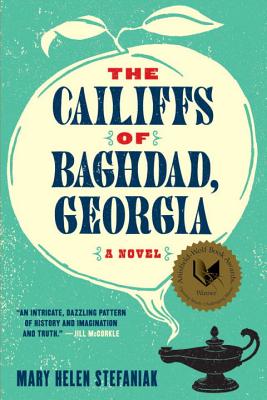
Interview with Mary Helen Stefaniak, Author of The Cailiffs of Baghdad, Georgia

One of our Book Passage Signed First Editions Club members, Jaime Boler of Laurel, Mississippi, shared with us an interview she conducted with author Mary Helen Stefaniak for her book The Cailiffs of Baghdad, Georgia. Jaime is a history instructor and she reviews books on her blog Book Magnet.


By Jaime Boler

The Cailiffs of Baghdad, Georgia ($15.95)
Jaime Boler: When did you begin writing this novel?  And what inspired you to write it?

Mary Helen Stefaniak: I began writing this novel in March 2003 after reading a newspaper story about the shock-and-awe bombing of Baghdad.  I knew almost at once that I wanted to write a novel in which a group of Americans had a relationship to Baghdad—and everything Baghdad represents—that was different from the one being developed at the time.  I wanted to remind anyone who happened to read the book that Mesopotamia is the cradle of our civilization.

JB: Do you have a favorite character in the story?  If so, who and why?  Which character is most like you?

MHS: My favorite character?  I don’t know.  To tell you the truth, I love them all.  Well, maybe I don’t love Mr. Gordon and Mavis Davis, Sr., quite as much as I love the rest of them, but I do agree with whoever said that you have no business creating a character for whom you feel no sympathy.

The answer to which one is most like me has to be the same as Flaubert’s famous comment: “Madame Bovary, c’est moi!”  They are all me in some way or another or I couldn’t have imagined them onto the page.

JB:  Is the character May modeled on your grandmother Mattie?  Was she also a storyteller?

MHS: I never met my grandmother Mattie.  She died in childbirth with her sixth child.

JB:  In a different time, do you think Ildred and Theo would have been more than just good friends?  Or am I reading something that was not intended?

MHS: I think Ildred had strong feelings for Theo, and he obviously cared about her.  They respected one another’s intelligence and understood each other’s value.  Those are the kinds of feelings that could support a deep and lasting relationship.

JB:  What does the white dirt, or kaolin, symbolize in your novel?

MHS: I don’t know that it symbolizes anything, but it is analogous to natural resources that have led to conflicts and exploitation in other parts of the world.  As a defeated country occupied and exploited by victorious forces and plagued by terrorism in the aftermath of a bitter civil war, the American South has a history that is not unlike that of other countries that have been occupied and exploited by victorious forces and plagued by terrorism in the aftermath of a bitter civil war.

When Theo is pulled from the old kaolin pit, the deadly power of white dirt certainly suggests the deadly power of intolerance and hatred.

JB:  What was the most difficult part of writing this story?

MHS: Keeping everything straight is tough whenever the story is long and complicated enough to be a novel, and simply persevering to the end was sometimes difficult, but the hardest part, as Hemingway once put it, was “getting the words right.”

JB:  Your book is narrated by eleven-year-old Gladys Cailiff.  Why did you choose to use the first-person narrative?  Why did you choose Gladys as narrator?

MHS: I needed someone who would be perceptive and observant but also innocent, at the time—and someone who could be completely enamored with Miss Spivey.

JB:  I had very mixed feelings about Miss Grace Spivey.  On one hand, I applauded her for bringing life to Threestep and for opening the minds of her students to new cultures and a love of learning.  Yet, she has an affair with a minor and seems naïve as to the consequences of the actions she sets in motion.  What is your opinion of Miss Spivey?  How did you come up with her?  What do you think would have happened to her?

MHS: A reviewer named JoAnn Heydron described Miss Spivey as “cigarette-smoking, libidinous, and wildly generous.”  I think that’s about right.  I see her as a well-educated, highly privileged person who was really trying to do some good in the world but who wasn’t willing or able to suppress her own desires and interests while she did it. She probably has a lot in common with certain Teach for America volunteers of our own day.  As for what would have happened to her, I think she would have gone back to her privileged life, back “home to her Daddy,” as Theo predicts when he’s arguing with Force about her, and from there, she would set out again on future adventures.

I asked one book club with a high proportion of teachers among the members to let me know what they thought of Miss Spivey, and they were kind enough to take notes on their discussion.  They acknowledged that she wasn’t perfect—they were glad, at least, that Force was not one of her students—but they gave me a pretty long list of what they liked and admired about her, which included things like reading to the students, recognizing the importance of storytelling in teaching, the field trips, involving the whole community in school activities, valuing diversity (to put it mildly), and getting rid of the paddles.  What kept coming up again and again, though, was Miss Spivey’s attitude toward state mandated requirements, which, for the most part, she ignored.  Many of the teachers liked her for that.  There was some feeling that state mandates reduced opportunities for creativity in teaching.

Miss Spivey did for Gladys and Threestep what good teachers always do for us:  they transform us, they empower us, they endow us with a love of learning that lasts our whole lives—and then, in the vast majority of cases, they disappear from our lives before we’ve gotten wise enough to know what they’ve done.

JB:  You make such a convincing case for the existence of Baghdad, Georgia, that I did some research and expected to find such a place.  I was so surprised to learn you made it all up! What was your inspiration for creating this special town?

MHS: The name and the location and the one-and-a-half-room school house are inspired by the real town of Deepstep, Georgia, which claims to be the Kaolin Capital of the World.

JB:  I was especially interested in the story of Bilali Mahomet.  I’m a historian who specializes in slave culture and resistance. In some research, I came across African-American slaves who practiced Islam.  One notable person was Ibrahima, who was an African prince brought to Natchez, Mississippi.  His master renamed him Prince, yet Ibrahima still practiced some Islam.  Did you know Bilali Mahomet would be in your novel when you set out to write your story or did you learn about him later?

MHS: I “discovered” Bilali Mahomet on a visit to Sapelo Island.  I’d already been working on the book for close to three years at that point, and I needed a coastal island for purposes of the plot, so on our next trip to Georgia, my husband and I left my mother with her sister in Milledgeville and set out for the coast.  We were in the visitor’s center, where you buy your tickets for the ferry and tour (on a schoolbus driven by a Park Ranger) of Sapelo Island, when my husband spotted something amazing in a display case:  a picture of a little handmade notebook, lying open, its pages crammed with Arabic script!  Just like that, I knew that I had found a real cultural ancestor for Theo Boykin, the smartest person in Piedmont County.  I had even equipped Theo with a notebook before I learned about Bilali’s.  I started reading in that direction and found out about other literate Muslims from West Africa who wound up enslaved in the Caribbean and in the Southern United States.   And here I’d been thinking that it was kind of a stretch, to put Georgia and “Baghdad” together in one novel!

JB:  I like how you have Bilali Mahomet’s descendants naming their children Bilali. They may not know its original meaning, yet the name still means something to them.  That was one of many historical accuracies I found in your book. How important is real history in writing historical fiction?

MHS: It’s funny, but I don’t think of The Cailiffs of Baghdad, Georgia as historical fiction, which I define as fiction whose purpose is to allow readers to experience a time other than their own.  While I had to try and “recreate” rural GA in 1938-39 (not to mention the Arabian peninsula in 1916, the Georgia coastal islands in 1920 or so, a bit of General Sherman’s march to the sea, a journey from West Africa to Baghdad in 1775 or so, and scenes from 9th-century Baghdad), my purpose was not, primarily, to allow readers to experience those other times and places. 

My primary purpose was to help readers (and myself) to see our own time more clearly.  That said, whatever the novelist’s purpose in recreating another time in fiction, I think  writers are obliged to be as accurate as possible in using historical events and details.  My personal rule for the use of history in my fiction, borrowed from Donald Barthelme, is simply:  “It does not contradict what is known.”   You can find long, windy essays on the subject of using history in fiction, but I think Barthelme pretty much says it all in those seven words, which I try to live by.

JB:  I read where your mother went to the same high school as Flannery O’Connor.  Peabody High School in Milledgeville, Georgia.  Your mother graduated in 1943 and O’Connor in 1942.  Did they know each other?  Were they friends?  What is your literary relationship with O’Connor?

MHS: I was in high school when I found out about that.  Somehow, knowing that my mother had gone to school with the author of one of the stories in the anthology we were reading in English class, that she and O’Connor walked down the same school hallways, and so forth, made it seem more possible to be a writer. And the stories she wrote!  They made you believe in the power of fiction, that’s for sure. My mother and her sisters knew who she was, but they belonged to the socioeconomic class from which she drew many of her characters, rather than the one to which she herself belonged.  Maybe that’s one reason why I felt so pleased to have my mother and her sister and some cousins in the audience when I did a reading in the dining room at Andalusia, the O’Connors’ farm outside Milledgeville (where Flannery lived and wrote during the most productive years of her short life).  As I have said on other occasions, pretty much everything I’ve ever written has been a tribute to Flannery O’Connor and at the same time an argument with her.

JB:  You and your husband John live in a 150-year-old stagecoach inn you restored. What is it like living there? Could there be a future story there?

MHS: There are a hundred future stories there, but I haven’t written any of them yet.

JB: I read a review that compared The Cailiffs of Baghdad, Georgia, to Harper Lee’s To Kill a Mockingbird.  But you really turn Harper Lee’s work on its head.  Can you talk about that?

MHS: I read To Kill a Mockingbird for the first time in a Great Books program. I was twelve or thirteen. I loved it immediately.  I’ve read it several times since. I owe a debt of gratitude, as a reader and as a writer, to Harper Lee, but as you say, there are some ways in which The Cailiffs of Baghdad, Georgia turns To Kill a Mockingbird upside down. If Atticus Finch is the best read person in Maycomb, Alabama, then his counterpart in The Cailiffs of Baghdad, Georgia is a 17-year-old African American named Theo Boykin.  (Not only that, but the only lawyer in Threestep happens to be the Grand Goblin of the local KKK.) In my novel, I wanted to give some credit to the less fortunate classes, both black and white.

JB:  What was your reaction upon learning your novel received the 2011 Anisfield-Wolf Book Award for fiction, an award that recognizes books that contribute to our understanding of racism and appreciation of diversity?

MHS: As I told the audience at the award ceremony in Cleveland, I was so thrilled to learn that people like the members of the Anisfield-Wolf award jury—Henry Louis Gates, Jr., and Joyce Carol Oates and Rita Dove and Stephen Pinker and Simon Schama–had read my book that they wouldn’t even have had to select it for the award.  Just knowing that writers and thinkers of their stature had read my work was so exciting.  Of course, I’m glad they chose it for the award, too.  If you go to the Anisfield-Wolf website and see the books and authors who have won the award in its first 75 years, you’ll have some idea of how honored I feel to have my book be among them.

JB: Who has influenced you the most in your writing?

MHS: I don’t know who has influence me the most, but I’ve learned a lot from Flannery O’Connor.

JB: You grew up in Milwaukee, Wisconsin, and vacationed in Georgia.  How was segregation different in the two very different places?

MHS: A librarian in Macon, Georgia, once told me, “In the North, segregation was spatial.  In the South, it was psychological.”  Growing up in the 1960s in a working class neighborhood on the south side of Milwaukee, I had no occasion to meet or speak to an African American until I went to high school. By contrast, in the little town where my aunt Sissie lived in Jones County, Georgia, her neighbors across the street were black, as were the families who lived down the road behind her little house. Not that I didn’t know there were official rules separating blacks and whites in Georgia.  But I can also remember thinking, as a kid, that the reason there were no “whites only” signs on drinking fountains in Milwaukee—we call them bubblers there—probably was that the nearest African American was likely to be miles away from that bubbler, there being no black people in sight.

JB: Did you find any people, events, or issues in your research for The Cailiffs of Baghdad, Georgia, that you would like to return to someday?

MHS: Issues, yes.  I think it’s so instructive to realize that racism is the same and different—in its manifestations and its targets—from generation to generation.  I’ve made some notes for a novel starring the interracial couple we meet in The Cailiffs of Baghdad, Georgia:  Ralph Ford, who saved Gladys Cailiff’s daddy, you may recall, in the Great War, and Lily.  Ford, I’ve decided, is from Milwaukee, where he grew up in an Italian neighborhood in the Bay View area (not far from the house where we lived with my Croatian/Hungarian grandparents when I was very small).  Ralph Ford’s father went through hell and high water in the 1890s, let’s say, to win permission to marry Ralph’s mother, who was the child of Italian immigrants.  He had to convert to Catholicism and move in with his in-laws before they would give their blessing.  His own English/Irish/German-American family disowned him in the meantime.   His son Ralph Ford, who “grew up Italian,” may have hoped that his family would accept his marriage to Lily because of the obstacles that his own parents faced back when Italians and other Southern Europeans were “blacks” as far as white Anglo-Saxon Protestants were concerned.

JB: What do you hope readers take with them after reading The Cailiffs of Baghdad, Georgia?

MHS: A different, more intimate and affectionate, feeling about the word “Baghdad” and the whole broad swath of history and culture that word represents—and more awareness of the long history of Islam in the U.S.  (I also hope that Gladys and Mavis and Force and Theo will live in their hearts forever!)

JB: What’s next for you?  I read where you were working on something that involved baseball?

MHS: The truth is that I’m working on three projects—two fiction projects and one nonfiction—waiting to see which one demands to be next.  Baseball plays a part in two of the three.

Saturday, October 8, 2011

Interview with Bill Bryson - Author of At Home


Bill Bryson is the prolific, hilarious mind behind such cherished classics as A Walk in the Woods and A Short History of Nearly Everything. On Monday, October 24th at 7;00pm, Bill Bryson will discuss At Home: A Short History of Private Life ($15.95 paperback) at Dominican University of California (Angelico Hall) in San Rafael, California. Please join us at this special Book Passage sponsored event. More info and tickets here.

In At Home, Bryson takes readers on a room-by-room tour through his own house, using each room as a jumping off point into the vast history of the domestic artifacts we take for granted. Book Passage contributing blogger Zack Ruskin spoke with Bryson about his newest book. Their conversation follows.

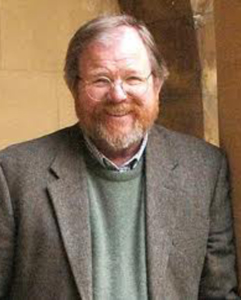
Author Bill Bryson
Zack Ruskin: Your newest book, At Home: A Short History of Private Life, takes the domestic home as its subject. Given the places you’ve traveled and the expansive nature of works like A Short History of Nearly Everything, what inspired you to write on your house?

Bill Bryson: I was struck by how little I knew about the history of the objects that surround us in our daily lives and thought it might be interesting to look into all the things we take for granted -- the things most immediately around us.  

Zack Ruskin: You’ve made a wonderful habit out of tracing the roots of things we pretty much take for granted. When did you first discover how engrossing the histories of refrigerators and chimneys could be?

Bill Bryson: I have always taken the view that almost everything is fascinating if you just take the trouble to look at it with an open mind.   

Zack Ruskin: Of all the minutiae you put to the microscope in At Home, is there any one tidbit that you find most astonishing?

Bill Bryson: What surprised me most was how long it took us, as beings, to get comfortable.  You would think that comfort is something we would naturally strive for, but actually for most of history most people -- even well off people -- lived in conditions that were cold and damp and woefully  ill-lit.  As I say in the book, the history of private life is really a history of getting comfortable slowly.  

Zack Ruskin: Many readers know you primarily through your travel narratives. Do you see At Home as a travel narrative of sorts, in addition to its qualities as a history text?

Bill Bryson: I suppose so, but in that sense all books are a journey of some sort, aren't they?  The main difference between this one and my travel books is that not once in At Home do I get drunk and make a fool of myself. 

Zack Ruskin: If you were living, say, a thousand years ago, what aspect of your home do you think you’d miss the most? For me, I’m pretty partial to indoor plumbing.

At Home: A Short History of Private Life
Bill Bryson: For me it would be lighting.  Something that everyone should do sometime is sit with a single candle in an otherwise completely dark and see how you would like to spend all your evenings like that.  It would drive you crazy.  Yet for much of history a single candle was all the light that most  most households would have burning at any one time.  

Zack Ruskin: I want to thank you for your Bryson's Dictionary for Writers and Editors. I keep in on my writing desk and consult it more often than I care to admit. What was your initial intention with that book? Were you seeing writers and editors make egregious mistakes, and wanting to straighten them out?  

Bill Bryson: Thank you for those kind words.  English is a tough language and, like most people, I am often uncertain about matters of usage and spelling.   Is the word for a rough patch of skin callus or callous?  What is the difference between imply and infer?  Do I write gantlet or gauntlet, and does it matter?  My idea was to provide a quick, concise guide to all the things (or at least all the ones I could think of) that commonly cause problems in English.  

Zack Ruskin: Many writers struggle to make the all-important first dent on the blank page or screen. As an immensely prolific writer, I’d love to know your approach for beginning a new book or article.

Bill Bryson: It is the hardest thing in the world, and I can tell you it doesn't get any easier.  I don't have any special trick, I'm afraid.  It's just a question of sitting down at a keyboard and making your fingers move.    

Zack Ruskin: I’m not sure why, but I have often thought about how amazing it would be to read a book by you set in Antarctica. Have you been there? Would you ever consider it?

Bill Bryson: I would love to go to Antarctica.  Unfortunately, I recently gave my wife a solemn vow that I would stop wandering off all the time and instead spend my twilight years following her around the garden with a wheelbarrow.  So Antarctica is not a realistic proposition for me at least in the short term. 

Zack Ruskin:  The element of humor is an integral part of your works. Do you ever feel obligated to be funny? How do you integrate humor into your prose?

Bill Bryson: For me, humor is always really hard work, and using humor when you are making a serious point is the hardest of all, but I do think it can make a world of difference to the accessibility of text at times.  

Zack Ruskin: Before I let you go, I’d love it if you’d share with us a couple of your favorite word origins. Etymology is such an awesome subject area, especially in the archaic land of the English language.

Bill Bryson: I love the way the meanings of words change and slosh about over time.  The example that spring to mind for me is toilet.  Originally it was a piece of linen fabric, then it became a ladies' dressing table, then the act of dressing, then the dressing room itself, then any small private room.  The result is that today toilet has lots of meanings that range from lavatorial to fragrant -- which is why there is a world of difference between "toilet" and "toiletries."      


Interview with Adam Mansbach - Author of Go the F*ck to Sleep

Adam Mansbach's spoof children's book, Go the F*ck to Sleep, has been flying off bookshelves and delighting exhausted parents since it was published this spring. Profane, affectionate, and radically honest, California Book Award-winning author Mansbach’s verses perfectly capture the familiar—and unspoken—tribulations of putting your little angel down for the night. On Monday, October 17th at 7:00 pm, Adam will read and discuss his new book at Book Passage in Corte Madera, CA. Please join us, but leave the kids at home!

Recently, Book Passage contributing blogger Zack Ruskin spoke with Adam about his new book. Their conversation follows.

Zack Ruskin: What was the process that took place between you having the idea for your book and it being parlayed into an actual published title?

Adam Mansbach: I thought of the book one night after putting my daughter to bed, and I jokingly posted on my Facebook: “be on the lookout for my upcoming children’s book, Go the F*ck to Sleep”. I was just kidding around, but in writing that, I realized, yeah, I know how to write that book, that might be a funny book to write. So it started percolating in my mind, and then a week or so later, I actually sat down and wrote it. From then on, it was conceptualized as something that would be a book, never on the web. I think some people have written or been mistaken in thinking that the book was first posted on Facebook, verse by verse. I had the initial idea while fucking around on Facebook, but then I sat down and wrote the book. Then, much later in the process - the book originally was supposed to be published in October, a couple weeks from now -in late April, I did a reading of the book, in Philadelphia at an art salon, and it went over really well. People started buying the book, pre-ordering the book online, and that sent the book skyrocketing to number one on Amazon. A week after that, a PDF of the book leaked. We had sent an early PDF of the book to booksellers, basically to try to get some support from them, blurbs and so forth. That PDF got leaked and started ricocheting around the internet, so at that point there was this pirated copy. We didn’t do that. We were actually sort of terrified. We thought it meant no one was going to buy the book. Luckily though, it’s bad form to show up at a baby shower with like a low-resolution, printed-out PDF that you pasted together.

Zack Ruskin: Once you’d written the text for the book, did you find that publishers were pretty skeptical of it as an idea, or did they think it was pretty sure-fire once you pitched it to them?

Adam Mansbach: I didn’t send it out to publishers. I really only sent it to Akashic. It wasn’t something I submitted broadly. I only took it there, both because I thought it might appeal to them, and also because I like the work they do, and Johnny Temple is a good friend of mine. I’ve done some things with them in the past. I remember the selection of people who saw the book. Johnny was the only person in the publishing world who got a look at it and he jumped on it. He thought he might be crazy to jump on it; it was somewhat uncharted territory for all of us. He did some research, showed it around to people: a distributor, bookstores. We got really good feedback, so we decided we should go ahead and take a shot at it.

Zack Ruskin: Were you guys pretty committed from the outset that you were going to keep all the profanity and not change any of that to try to cater to a larger audience?

Adam Mansbach: Yeah. That was the book, and that was the fun of the it. We were always very clear on that. There was never any question of cutting the cursing out or anything like that.

Zack Ruskin: I read recently that you’re doing a new version of it that doesn’t have cursing in it, a version that could actually be read to kids.

Adam Mansbach: We’re doing a kind of companion volume that’s actually intended for kids in the spring. It’s called, Seriously, Just Go To Sleep. It’s in no way meant to replace the original -- it’s a different book. It has different illustrations, and different verses. It’s very much related to the original, but it’s not a replacement.

Zack Ruskin: Was Seriously, Just Go to Sleep based on feedback from people saying to you or Akashic, “God, I wish I could to read this book to my kid, but I’d be a bad parent if I did”?

Adam Mansbach: That’s exactly right. It was also a lot of people saying, I do read this to my kid, but I have to censor it as I go. We figured, let’s give them something where they don’t have to do that, and they can read the words as they actually stand, the way they’re intended to, and kids can enjoy it.

Zack Ruskin: As far as the illustrations go, was there a type of kid’s book, or a specific book that you drew inspiration from?

Adam Mansbach: No, it was really more that I knew Ricardo would be a great illustrator for it, and I just reached out to him. He’s an old friend of mine, and I liked his work and admired his work for years. We’d actually worked together in the past, way back in the day, when we were back in college on a hip-hop magazine that I started called Elementary. Ricardo was the art director for it. I had a conception of what the illustrations should be like, that they should essentially play the straight man. The verses were going to be where the humor lay, and so it became clear that Ricardo’s job was to play counter-point to the words. We wanted each illustration and verse to have a unique relationship to one another, so that it wasn’t too predictable, so that we would keep readers guessing a little bit about how it might play out. Ricardo’s style is so beautiful; in a way I think the book gave him liberties to be as cloyingly sweet as he wanted to in places, because the verses were going to counter-punch that. The illustrations were sometimes straightforward, sometimes a bit subversive. They have little touches, and in the children’s version, there’s even more of that, because now we get to play off the original book. Readers of the original book might get a little kick out of seeing how we flipped it up.

Zack Ruskin: You’ve found out Go the F*ck to Sleep is going to published. Do you have any sort of inkling that people are going to crazy for it, that it’s going to become a de-facto baby shower gift?

Adam Mansbach: I didn’t have many expectations. I was just tickled that the book was going to be published at all, because it was wacky. It didn’t fit into any genre. It was this crazy thing that I’d written for my own amusement, so really I was excited that it was being published at all. It’s funny - it was exactly a year ago that I sent Johnny my initial email. The other day he dug it up, the original email I sent him to pitch the book, and in that email, I’d completely forgotten about this, I said something to him like, “I think every parent in the world can relate to this”. Partly that was me pitching a publisher, but I think I did believe that too. I didn’t have any expectations, but I guess I thought that at most, it would become this kind of cult classic/niche thing. I never dreamed it would have the mainstream encouragement it’s had, or that we’d sell the number of copies we’ve sold. That definitely never entered into my mind. I’d have to be some kind of asshole to have anticipated this level of success.

Zack Ruskin: That’s true. There’s only one way to answer the question. You can’t be like, “of course I thought it would be huge!".

Adam Mansbach: (laughs) Oh yeah, I knew this was coming. I bought a Bentley in anticipation of this happening.

Zack Ruskin: Now that you have this under your belt, and soon the kid’s adaptation too, are you pretty well set in the genre? Is Akashic maybe hoping that you’re going to think of something else that would sit comfortably on a shelf next to Go the F*ck to Sleep?

Adam Mansbach: I wouldn’t rule out doing something in a similar vein at some point, but I’m certainly not in a rush. I don’t want to be the guy who takes a good idea and beats it into the ground, and does successively less funny books until everybody is like, “oh, give me a fucking break, you’re such a cheeseball”. I was writing novels before this, and I’ll continue to write novels after this. I have a bunch of other projects coming out, and they are not obscene, fake children’s’ books. I have a new novel coming out, a graphic novel on the way, a couple thrillers I just did a deal for and I just sold a TV show. So I have a bunch of other shit on my plate.

Zack Ruskin: Is your graphic novel an original work?

Adam Mansbach: Yes it is. It’s called Nature of the Beast. I’m really psyched about it. It’s kind of an action-adventure-sci-fi thing, and it’s pretty crazy.

Zack Ruskin: Is it a self-contained thing or is it the first volume of something larger?

Adam Mansbach: It’s a self-contained story. It’s like 235 pages, so it’s a pretty substantial piece. It’s full-color and beautifully illustrated by Owen Brozman. I wrote it with a buddy of mine named Douglas McGowan. Doing that much art takes a long time, so this has been in process for years at this point, and I think we’re ready to let it out into the world.

Zack Ruskin: I want to make sure I ask you about the audio version of Go the F*ck to Sleep, which is amazing. I’m curious if before Sam Jackson came on-board, if you had a little hit-list of names, like “if it could be any of these five people, I’d just die”?

Adam Mansbach: They asked us for suggestions, so we put a list together, and we totally had our dream list of people. Sam was one of them. So was Christopher Walken. Werner Herzog, who ended-up recording a version for us, was on there. Then I had some more whimsical choices of my own. I would like to hear Slick Rick do the audio version, for instance. That would mean a lot to me personally…probably not to anyone else.


Zack Ruskin: I’ll keep my fingers crossed for that to happen.

Adam Mansbach: Thanks!

Zack Ruskin: What was it like when you first heard Samuel Jackson read your book?

Adam Mansbach: Actually, the first time I heard him do it was the day the book was published. We had our launch party at the New York Public Library and a friend of mine played it for me and took photos of my reaction to hearing it for the first time.

Zack Ruskin: I’d love to see those photos.

Adam Mansbach: My face made expressions I didn’t even know were possible.


Thursday, September 15, 2011

Interview with Erin Morgenstern - Author of The Night Circus

Erin Morgenstern's debut novel, The Night Circus, is just out. It promises to be one of the big books of the Fall - we're excited, and so is just about everyone else! On Sunday, September 18th at 1:00 pm, Erin will read from and discuss her new book at Book Passage in Corte Madera, California. Please join us for this special event. The first 100 attendees who purchase a copy of The Night Circus from Book Passage will receive a free signed limited edition Night Circus keepsake featuring artwork by Erin Morgenstern!

Recently, Book Passage contributing blogger Zack Ruskin spoke with Erin about her new book. Their conversation follows.
Zack Ruskin: Your novel’s been described as a fairy tale of sorts, and on your website, you list fairy tales as a major source of creative inspiration. What defines a fairy tale for you?

Erin Morgenstern: Oh, people ask me that and I tell them I don’t really have a good, specific answer. I think there’s something in that “once-upon-a-time” quality, where it has a really strong sense of story, and seems sort of timeless. I think with my writing in particular, I like the quality of those really graphic, pre-Disney fairy tales, dark and bloody, grim stuff that’s gotten a little polished over time – the old school fairy tale stuff.

Zack Ruskin:  Is there any particular fairy tale you consider to be a favorite?

Erin Morgenstern: I have a lot of favorites. Probably my very favorite is "The Snow Queen." That might even partially be why there is so much ice and snow in The Night Circus. It’s such a different feel to a lot of the classic fairy tales.

Zack Ruskin:  Are there any contemporary fairy tale writers you like? Kelly Link comes to mind.

Erin Morgenstern: I love Kelly Link. I like her stories. I can’t really write short stories – my stuff is either epic or very, very short. I can’t do that perfect short story, which she does so, so well. She can create a complete world in such a succinct way.

Zack Ruskin:  Your novel is filled with fantastic descriptions: of clocks, magic and even a few kittens. As a painter, are descriptions the element of prose that most closely resembles painting to you?

Erin Morgenstern: That’s an interesting way of putting it. I think it is probably where I get to be the most visual. I’m a very visual person in general. I see everything in my head. A lot of the time when I’m describing something in my writing, I’m just transcribing a picture that’s in my head and taking out details to mark down to try to translate that image into words. But I do it with not just visual things; I kind of picture everything in my head. I also have a background in theater, so I end-up directing scenes in my head, everything from where people are standing to the lighting design. I do think the fact that I have a background in art means I’m more concerned with what things look like than some writers.

Zack Ruskin:
  That makes sense. Do you ever paint out elements of your story or characters to help your writing process?

Erin Morgenstern: I don’t really. I like to say I write what I can’t paint, and I paint what I can’t write. So really there’s not a whole lot of overlap. I’ve done paintings that are evocative of some of the circusy things, but I haven’t really tried to draw them. I did make paper models of a couple of tents when I was trying to figure out logistics, in particular on the Stargazer, because I wanted to make sure it was conceivable from the way I was picturing it in my head.

Zack Ruskin:  That sounds like a fun project to take on.

Erin Morgenstern: The kittens were not helpful with that project.

Zack Ruskin:
  I know this is your first novel. Have you been painting longer than you’ve been writing?

Erin Morgenstern: I have been. I’ve painted since I was very little – I took art classes starting in elementary school, and later, I was a studio art minor in college. I thought about writing way more than I ever wrote. It was always something I thought I might like to try, but I didn’t really start writing seriously until I was in my twenties. I took playwriting classes in college but never finished any plays.

Zack Ruskin:
I know The Night Circus is brand new, but have you considered or been approached about a possible graphic novel adaptation?

Erin Morgenstern: I’ve heard whisperings of a possible graphic novel. I would just want someone else to do it. I would love to see what someone who actually does that type of art would do. I don’t know if I’d really want to do any circusy art for myself, but I would love to see other peoples’ interpretation of it.

Zack Ruskin:  I feel like the vignette quality of your novel works in a way where you could have different artists doing different pieces of it. 

Erin Morgenstern: Ooh, that would be marvelous.

Zack Ruskin: I’ve seen it done before. The story definitely has to lend itself to that format, which I think yours does. Getting into the content of your book, your story follows two magicians: Celia and Marco. While you were writing, did you do any research on magicians?

Erin Morgenstern: I didn’t do a whole lot of research. I had a flavor of the era’s stage magic, from books and movies and that sort of thing. I didn’t want it to seem particularly historical, so I made things up that seemed right to me and then occasionally I’d check to make sure I wasn’t being too terribly anachronistic. Hopefully no little things snuck in there that are inappropriate. I wanted it to be its own thing – a different sort of magic, influenced by those great stage magic shows, and to have maybe a hint of The Prestige in there, but to be something else.

Zack Ruskin:  Did you go to the circus as a kid?

Erin Morgenstern: I don’t even really like the circus. Like, the actual circus-circus, with the clowns. No one likes clowns, and anyone who says they do, I’m a little skeptical of. I like the idea of an entertainment venue that’s an active thing, which you go to experience, rather than just watch. I think the circus atmosphere has that sort of quality, where you go in, and you get to decide what you’re going to look at and how your evening is going to unfold. That was the feel I wanted with my circus setting, although it’s not really a traditional circus. I went to the circus many, many years ago. I’ve yet to see Cirque de Solei, but I’d love to. I think that’s a little more my scene, circus-wise.

Zack Ruskin:
I think it’s fair to say we’re both too young to have seen the original incarnation of the circus that perhaps you’re more closely channeling in your book.

Erin Morgenstern:
Yes.

Zack Ruskin:  Earlier you mentioned your theatre background. I recently read an interview with you where you talk about the production Sleep No More.

Erin Morgenstern: It’s phenomenal. I’ve seen it 7 times. Their first production they did up here in Boston, about two years ago, and I actually went by accident. I was in the middle of revising the book, it was October, it was raining, and I needed to get out of the house. I got a postcard for Sleep No More and it sounded so intriguing, I just had to go. It was instant art love. It’s hard to even describe. It’s the closest experience I’ve had in real life to what I think the experience of going to the circus would be, where you’re being completely immersed in that world.

Zack Ruskin:  Do you see a correlation between that production’s avant-garde approach to theater and your approach to your novel?

Erin Morgenstern: I do. I saw it when I was rewriting, so I was kind of amazed because I thought things like that only existed in my head, so the fact that someone had actually put together this amazingly detailed, completely absorbing experience was absolutely mind-blowing to me. I took a few little elements from that production and worked them into the circus itself. It definitely had an influence on the tone of the circus. It already seemed circusy to me, but then I added a few extra elements as an homage to Sleep No More.

Zack Ruskin:  You have an on-going flash fiction project called flaxgolden. I just started one where I write a story on a Post-It Note everyday. I find it immensely helpful for getting ideas out of my head. What prompted you to begin yours?

Erin Morgenstern: It actually began as two separate problems I had. I was starting to revise the book, and I knew that all of my descriptions were way too long, so I wanted an exercise to teach myself to write more succinctly. I also wanted my blog to look more like I was a writer, instead of just being all pictures of kittens. I was like, “what can I do that would make my site seem a little more writerly?”. I decided I’d do little, tiny stories. I’d had the idea to do something with pictures for a while. I was a little bit inspired by Chris Van Allsburg’s The Mysteries of Harris Burdick.

Zack Ruskin:  That book is amazing.

Erin Morgenstern: I love how it’s just the image and one little line. It has such a curiosity factor to it. My friend Carrey takes gorgeous photographs, and I didn’t want to work with my own images because I felt they would influence me too much. It ended-up being a great project. Actually, I thought I was going to end it after a year but she had so many photographs that it’s been two years now.

Zack Ruskin:  I’m so happy that you’re referencing Harris Burdick as an inspiration. I feel the same way about it.

Erin Morgenstern: NPR recently asked to me to recommend a book to their readers, and I choose Harris Burdick.

Zack Ruskin:  You’re collaborator takes the photos that you write on. Is she looking for story-caliber shots, or are you just choosing from a big pile of photographs that she’s taken?

Erin Morgenstern: I’m mostly choosing from a pool of photographs. I started doing it when she had a big backlog of photos, so there’s a lot of ones that are photographs she’d taken years ago, but since we’ve been doing it for a while, she says now when she’s taking photos, she wonders “is this one Erin will use?”.

Zack Ruskin: 
Are there any flash fiction writers you’d recommend to readers?

Erin Morgenstern: I haven’t actually read that much flash fiction. I didn’t think of my stories as flash fiction when I first started, but that’s exactly what they are. I’d like to read some more though, so if you have recommendations, I’d love to hear them.

Zack Ruskin:  There’s a guy named Etgar Keret that I think is one of the best. An Israeli writer.

Erin Morgenstern: Right. Someone else told me I should read him.

Zack Ruskin:  Going back to The Night Circus, it seems like anybody who types your book’s title into Google is going to get a lot of results back on the potential film version in the works. I’m not going to ask who you would cast in the movie or anything, but I would like to know if it were up to you, what bands or music would you use to soundtrack the movie?

Erin Morgenstern: Ooh, very nice. Since the production company is the same one that did the Twilight films, I do have a secret wish that we could get a Florence + the Machine song. I’d be very, very happy because I love them so much and I think they have a good sound for the circus, an ethereal quality. Soundtrack wise, I hope it’s very evocative, because people have told me my book really captures things like the smell of the circus. I tried to get a lot of sensory information into the experience of the circus itself. Music is one of the things I couldn’t get across, so I’d be interested to hear what they come up with.

Zack Ruskin:  You recently released a soundtrack online for the book.

Erin Morgenstern: I did. It was one of my marketing people’s ideas. It’s mostly things I was listening to while I was writing, and then a few tracks that feel like they sound like the circus.

Zack Ruskin:  Good call on the Andrew Bird. I think he fits well.

Erin Morgenstern: Funny thing about Andrew Bird, Carrey is big in folk circles, and Andrew used to play shows in her living room. It was only a couple years ago that I found out he was a big deal. She’s known him for years. I was like, “wait, that’s Carrey’s friend!”.

Zack Ruskin:  Can you see The Night Circus being the first book of a series?

Erin Morgenstern: I never intended it to be a series. I don’t think it’s structurally something that lends itself to a series. I think the best series are always intended, that that’s the form they’re going to be told in, a serial manner. This was always its own story, just one book.

Zack Ruskin:  Why do you think so many people want your novel to be the first part of something longer?

Erin Morgenstern:
I think people maybe want it to be a series because they like the world. There’s a quality about books that you enjoy escaping into, where you want to return, and it’s always nice when there’s more – additional books to have that experience in a new way. I don’t anticipate or intend to write a direct sequel. I think there’s enough other material, between back stories and side characters, that I could maybe do a collection of short stories. I don’t think it will be a true series though.


Zack Ruskin:  Before I let you go, I want to ask you about the publicity and promotion that’s being done for your book. Bookstores are hiring jugglers and contortionists and planning big, circus-themed release parties for when your book is published next week. Is all this hoopla overwhelming? Did you ever imagine you’d get this kind of response to your book?

Erin Morgenstern: I never imagined. We surpassed wildest dreams territory a while ago. I just wanted to have a book that you could pick-up and read. That was as high as I was hoping. The fact that people are embracing it in such an enthusiastic way: it’s humbling and flattering, but still a little bit overwhelming, the scale it’s taken on.